

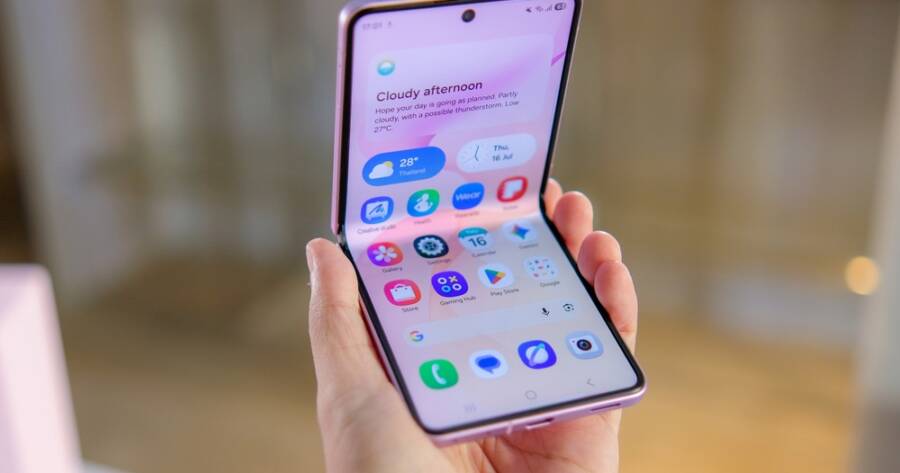
The flip phone has returned in a form that looks very different from the compact handsets of the early 2000s. Modern foldables combine flexible displays, powerful processors, larger outer screens, and increasingly refined hinges with the familiar appeal of a phone that closes in half. The result is a category blending nostalgia with some of today’s most advanced smartphone engineering.
From Clunky Origins to Sleek Modern Designs
The evolution of the foldable phone is nothing short of remarkable. Early versions were bulky by today’s standards, with the original Galaxy Fold measuring around 0.7 inches thick when closed. Fast forward to the present, and the latest Samsung Galaxy Z Fold 8 has slimmed down to just 0.34 inches when closed, representing a dramatic leap in engineering (source). That kind of transformation signals that foldable manufacturers are no longer experimenting — they are delivering refined, mature products.
Modern foldables fall into two primary categories. Book-style devices open up to reveal a tablet-sized inner display, making them ideal for multitasking and media consumption. Clamshell-style phones, on the other hand, fold down to a size smaller than a standard deck of cards, prioritizing portability without sacrificing screen real estate when open (source). Both formats have attracted dedicated fans, and each addresses different lifestyle needs.
The Flip Phone Reimagined: Clamshell Foldables Lead the Way
Among foldable form factors, the modern flip phone has emerged as a particularly exciting category. Devices like the Samsung Galaxy Z Flip series and the Motorola Razr lineup have redefined what a compact phone can do. The Samsung Galaxy Z Flip 8 earned high praise from testers, receiving recognition for its thin and lightweight construction, improved cover screen software, and standing out as the most powerful flip phone evaluated so far in its class (source).
The outer cover screen has become a major battleground for innovation in clamshell foldables. Rather than serving only as a simple notification display, today’s cover screens run full apps and support meaningful interaction without the user ever opening the device. The Motorola Razr Ultra, for example, pushes the boundaries of what software can accomplish on these compact outer displays (source). This shift turns the flip phone into a genuinely useful tool even when kept closed.
Durability Has Become a Priority
One of the biggest concerns that followed early foldables was longevity. Could a phone with a folding hinge truly hold up to daily use? Manufacturers have responded with impressive engineering data. Samsung states that both the Galaxy Z Fold 7 and Z Flip 7 are each built to endure up to 200,000 folds across their lifespans (source). Motorola goes further, with the Razr Ultra rated for 400,000 folds, which translates to roughly 100 folds per day for over five years of continuous use (source).
These figures suggest that modern foldables are no longer fragile novelties. The hinge mechanisms have matured significantly, and the accompanying software and hardware refinements have made these devices reliable daily drivers for a growing number of users.
A Competitive Market With More Players Than Ever
Samsung has long dominated the foldable segment, but the competitive landscape is shifting. Google has made strong inroads with the Pixel fold lineup. The Google Pixel 11 Pro Fold, for instance, measures just 5mm thick when open and 10.1mm when closed, earning recognition as Google’s sleekest foldable yet, complete with a durable build and slimmer bezels (source).
Even Apple has entered the space. The company introduced the iPhone Duo at its most recent fall event, making it one of the last major smartphone manufacturers to bring a foldable device to market (source). Apple’s entry signals that foldable technology has moved firmly into the mainstream, rather than remaining a niche experiment.
Pricing Reflects the Premium Experience
Foldable phones sit at a higher price point than conventional smartphones across the board. Entry-level foldables start at several hundred dollars more than traditional flagships, while top-tier models can reach significantly higher price tags. The Motorola Razr (2026) represents one of the more accessible entry points, while the Samsung Galaxy Z Fold 8 Ultra sits at the premium end of the spectrum at $2,700 (source). For buyers ready to invest, foldables deliver an experience that conventional smartphones simply cannot match.
The added cost reflects not just the hardware innovation involved, but also the software ecosystem, camera capabilities, and multitasking features packed into these devices. For many users, the convenience of a compact flip design combined with a full-size display when needed justifies the premium.
Why You Should Learn More About Foldable Flip Phones Today
The modern flip phone is no longer a novelty. It is a legitimate category that major manufacturers are investing in heavily. With every new generation, foldable devices grow slimmer, more durable, and more capable. From Samsung’s continued dominance to Google’s refined hardware and Apple’s long-awaited market entry, competition is driving rapid improvements that benefit every consumer.
Whether someone prioritizes portability, productivity, or simply a distinctive design, today’s foldable flip phones offer compelling options worth exploring. As technology continues to advance and prices gradually become more competitive, the foldable flip phone may soon become the standard rather than the exception.