

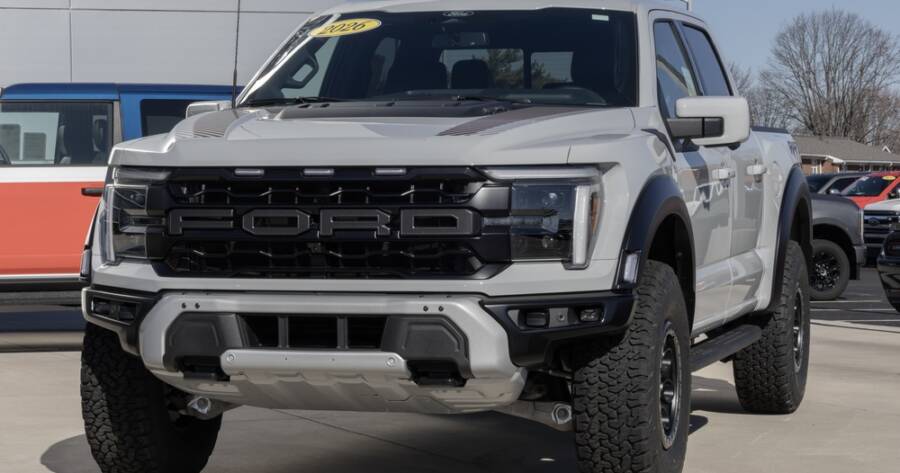
The 2026 Ford F-150 has become one of the most debated trucks on the market — praised by experts for its powerhouse performance and broad versatility, yet criticized for a design that some reviewers describe as overdue for a serious refresh.
A Truck at a Crossroads: Design Praise and Criticism
Few vehicles in the American automotive landscape stir as much passionate debate as the Ford F-150, and the 2026 model year has done nothing to quiet the conversation. The truck entered this generation following a redesign in 2021 and a subsequent facelift in 2024, and according to industry observers, it is expected to carry forward largely unchanged before a next-generation model arrives sometime around 2027 or 2028 (source). That timeline has left some enthusiasts wondering whether the current exterior is simply too familiar — a stylistic holdover in an era when competitors are pushing bold new looks.
MotorTrend’s editorial team directly calls out “aging exterior styling” as one of the F-150’s notable drawbacks, expressing a desire for Ford to “modernize the styling of its pickup” without stripping away the rugged, utilitarian character that has made the truck iconic (source). Whether that amounts to the ugliest truck of the year or simply a bold design that has overstayed its welcome depends entirely on who is doing the evaluating. For longtime F-150 loyalists, the familiar silhouette still communicates serious capability. For design critics, it reads as a missed opportunity.
Performance That Demands Attention
Whatever one thinks of the exterior, the powertrain story behind the 2026 F-150 is far harder to dismiss. The truck arrives with four distinct engine configurations, each targeting a different kind of driver. A twin-turbo 2.7-liter V-6 producing 325 horsepower anchors the lower end of the lineup, while a naturally aspirated 5.0-liter V-8 and a more muscular twin-turbo 3.5-liter V-6 both deliver 400 horsepower. All three pair with a 10-speed automatic transmission (source). For drivers who want even more, a hybrid system combines that same 3.5-liter twin-turbo V-6 with an electric motor to produce a combined 430 horsepower and 570 lb-ft of torque (source).
At the extreme end of the performance spectrum sits the Raptor R, a machine in an entirely different category. Powered by a supercharged 5.2-liter V-8, it generates 700 horsepower and 640 lb-ft of torque — numbers that push it well beyond traditional truck territory and into the realm of high-performance off-road vehicles (source). The Raptor R represents the most extreme expression of what Ford believes a work-capable truck can become when performance becomes the primary objective.
Towing, Payload, and Practical Capability
Beyond raw power, the F-150 continues to position itself as a legitimate workhorse. Maximum towing capacity reaches 13,500 pounds, and the truck can handle a payload of up to 2,455 pounds — figures that keep it directly competitive with rivals such as the Chevrolet Silverado 1500 and Ram 1500 (source). For buyers who need a truck that can tow a sizable trailer or haul heavy equipment without compromise, the F-150’s numbers still make a strong case.
Nine Trim Levels Across a Wide Price Range
Ford offers the 2026 F-150 across nine distinct trim levels, stretching from the stripped-down XL work truck all the way up to the Raptor and Raptor R performance variants. Between those extremes lie the STX, XLT, Lariat, King Ranch, Platinum, and Tremor, each targeting a different buyer profile with varying levels of equipment and refinement (source). That breadth is a core part of the F-150’s enduring market dominance — few trucks offer such a wide spectrum of configurations within a single nameplate.
The interior quality story shifts significantly as buyers move up the trim ladder. Car and Driver points out that entry-level configurations come with “down-market cabin materials” and a “stiff-riding rear suspension,” while upper trims like the King Ranch and Platinum deliver interiors that rival the luxury touches found in the Ram 1500 (source). That means the F-150 can feel like two different trucks depending on which version a buyer selects — a practical daily workhorse or a near-luxury vehicle with serious towing credentials.
Expert Ratings Reflect the Full Picture
Despite the design criticisms circulating among auto reviewers, the 2026 F-150 continues to earn strong marks from industry publications. MotorTrend ranks it second among full-size trucks with an overall score of 9.1 out of 10 (source). Car and Driver goes even further, awarding it a 9 out of 10 rating and an Editors’ Choice designation — a recognition typically reserved for vehicles that deliver exceptional overall value and performance in their segment (source). Those scores reflect a vehicle that may not be winning design awards in its current form, but continues to deliver where it counts most for truck buyers.
Why Truck Buyers Should Learn More About the 2026 Ford F-150
The 2026 Ford F-150 presents a compelling case study in automotive tension — a truck that earns near-perfect expert ratings while simultaneously drawing criticism for its exterior direction. Its engine lineup spans from capable daily drivers to a 700-horsepower off-road powerhouse, and its nine trims serve buyers across a wide range of needs and budgets.
With a next-generation redesign expected within a couple of model years, the current F-150 represents both the peak of a long-running formula and the final chapter before something new arrives. For anyone evaluating full-size trucks in 2026, understanding the full scope of what the F-150 offers — and where it falls short — remains essential to making an informed decision.