

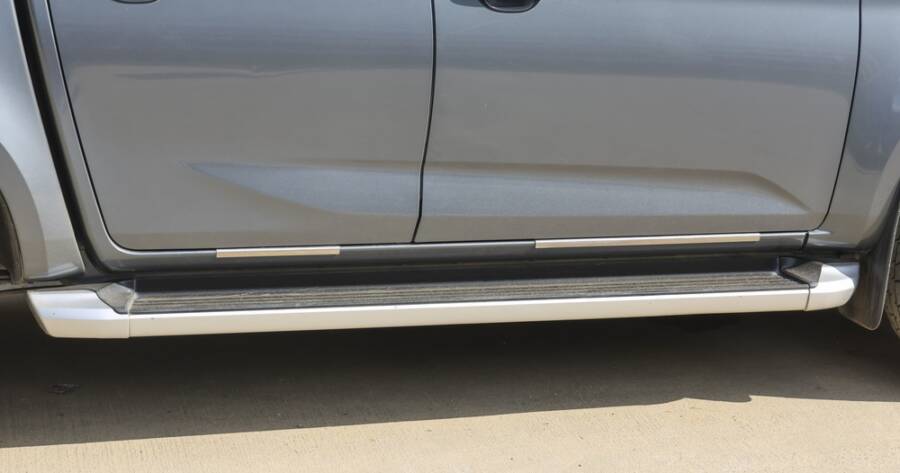
Truck owners across the United States are rethinking factory-installed running boards and turning to aftermarket options that better match their driving style, aesthetic preferences, and performance needs. The choices currently available span a wide range of designs, materials, and technology.
Why Truck Owners Are Moving Away from Factory Running Boards
Factory running boards are often built to a baseline standard — functional enough for most buyers, but rarely optimized for off-road capability, lifted suspensions, or personal style. As more truck owners customize their vehicles, the aftermarket running board segment has grown substantially to meet that demand. The global market for nerf bars and running boards is on a strong upward trajectory, reflecting just how seriously enthusiasts are taking this modification (source).
North America is at the center of this movement, where high rates of SUV and pickup truck ownership fuel consistent demand for aftermarket side-step products (source). Whether a truck serves as a work vehicle, a trail rig, or a daily driver, there is an aftermarket running board solution tailored to that specific use case.
Understanding the Main Running Board Styles
The aftermarket landscape includes several distinct product categories, each built for a different type of driver. Traditional running boards are wide, flat platforms that span the full length of the truck’s side — sometimes reaching up to ten inches across — providing a large, stable surface for entry and exit (source). They are a practical choice for daily drivers and trucks that frequently carry passengers who need a reliable step.
Nerf bars take a different approach with their tubular design, offering a more streamlined look while still reducing the step distance between the cab and the ground (source). Their mounting flexibility is a key advantage — nerf bars can be positioned up to a foot below the rocker panels, making them particularly useful for trucks with lifted suspensions (source). However, nerf bars are designed for lighter-duty use and are not engineered to withstand the rigors of job sites or rough off-road terrain (source).
For truck owners who regularly push their vehicles off the pavement, rock sliders represent the most heavy-duty option. These accessories bolt right to the truck frame using thick steel tubing and are built specifically to shield the rocker panels, doors, and undercarriage from rocks and debris encountered on the trail (source). Some hybrid designs, such as boards that also function as rock rails, keep the step platform flush to the body without sacrificing ground clearance (source).
The Rise of Power-Retractable Running Boards
Among the most talked-about trends in the aftermarket space is the growing popularity of power-retractable running boards. These motorized systems deploy automatically when a door opens and retract flush against the vehicle once the door closes — a feature that is especially practical on lifted trucks where a permanent step would otherwise compromise clearance (source). Electric-powered running board technology is projected to be the fastest-growing segment in the market, with an anticipated annual growth rate that outpaces traditional styles through 2033 (source).
The appeal is not purely functional. Power-retractable boards give trucks a cleaner, more refined appearance when the steps are tucked away, which resonates with owners who want a premium look without permanent visual bulk. As electric vehicles and premium SUVs grow in popularity, this technology is becoming more accessible across a broader range of truck models.
Material Choices Are Shaping the Market
Beyond style and function, material selection plays a major role in a buyer’s decision. Steel remains common for heavy-duty applications due to its strength, but aluminum is rapidly gaining ground as a preferred material. Its combination of lightweight properties and natural resistance to corrosion makes it especially attractive for truck owners in regions where road salt and moisture accelerate wear (source). Aluminum’s growth rate within the running board market is expected to surpass that of competing materials over the next several years, reflecting broader automotive trends toward weight reduction and longevity (source).
Price also varies significantly depending on material and feature set. Entry-level nerf bars and step bars can be found for under $100, while fully motorized power-step systems can approach $1,000 — a range wide enough to accommodate nearly any budget (source). Shoppers are advised to consider not just upfront cost but also long-term durability and compatibility with their specific truck model before committing.
Matching the Right Running Board to the Right Truck
Choosing an aftermarket running board is not a one-size-fits-all decision. A truck used primarily for hauling gear on job sites has very different requirements than one built for weekend trail runs or family highway trips. Compatibility with the truck’s existing lift kit, cab style, and intended use should all factor into the selection process. Many manufacturers provide fitment tools that match specific products to particular makes, models, and years, which simplifies the process significantly.
Installation complexity also varies by product type. Basic nerf bars are often straightforward enough for a confident DIY installer, while power-retractable systems with electric motors may require more technical knowledge or professional installation to function correctly. Buyers should account for these factors when evaluating total cost of ownership.
Why You Should Learn More About Running Boards Today
Aftermarket running boards have evolved well beyond a simple factory substitute. From tough, frame-mounted rock sliders built for the trail to sleek, motorized power steps designed for premium daily drivers, today’s options let truck owners make a purposeful statement about how they use their vehicles.
Material innovations in aluminum are extending product life while reducing weight, and electric-powered designs are redefining what a side step can do. Whether the priority is rugged protection, effortless accessibility, or a sharper visual profile, there is an aftermarket running board that fits. Understanding the differences between styles, materials, and price points puts truck owners in the best position to make a smart, lasting modification decision.