

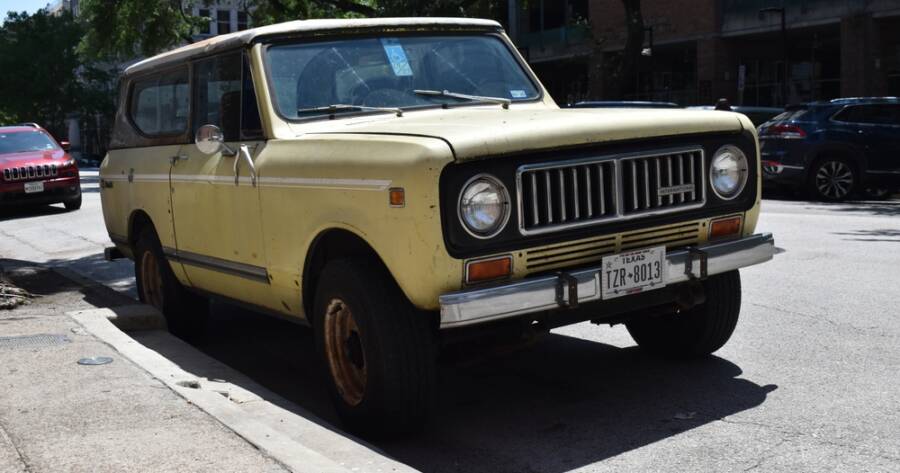
After more than four decades away, the Scout nameplate is returning with a design that blends modern electric performance with unmistakable retro influence. From vintage-inspired colors and throwback graphics to familiar proportions and styling cues, the new Scout revival draws heavily on the character that made the original off-roader an American icon.
A Legend From the Past, Reborn for the Road Ahead
The original International Scout holds a special place in American off-road history. Produced by International Harvester from 1960 through 1980, the Scout was built to compete directly with the Jeep CJ, and it ultimately laid the groundwork for later iconic vehicles like the Ford Bronco and the Chevrolet Blazer (source). Over its two-decade production run, more than half a million Scouts rolled off the line, cementing its status as a genuine American classic (source).
The Scout II, introduced in 1971, became the most recognizable version of the lineup. Its sheet metal stayed essentially untouched from introduction all the way to the final day of production in October 1980 — a testament to how well the original design resonated with drivers (source). Among the variants that emerged during that era, the Scout II Traveler stood out as a long-wheelbase hauler offering a removable fiberglass hardtop and an optional third-row seat, riding on a 118-inch wheelbase (source). That same Traveler nameplate now headlines the all-new electric revival.
Harvest Gold and the Retro Color Craze
One of the most talked-about aspects of the Scout revival is its potential color palette — specifically, the warm, earthy tones that defined the original vehicles. Colors like Apache Gold were beloved hallmarks of the 1960s and 1970s Scout era, and the online community surrounding the new electric model has been vocal about wanting that spirit carried forward (source). Fan-created renderings shared on the Scout EV Forum have showcased bold vintage shades and throwback stripe packages, generating significant excitement ahead of the vehicle’s official launch (source).
Among the retro-inspired options explored in those renderings, warm yellows and golds have drawn particular attention. Shades like “Slam Yellow” have been noted for their distinctly vintage character in render form, while earthier tones like “Sand” also evoke the dusty, rugged palette that made original Scouts so visually memorable (source). Rally graphics packages inspired by original Scout designs have also appeared in the renderings, and given how closely Scout Motors has been monitoring enthusiast forums for feedback, such options may well appear on production models (source).
Harvest Gold, as a concept, fits squarely within this aesthetic conversation. It represents the kind of warm, period-authentic hue that original Scout owners remember fondly — a color that doesn’t just look good on an off-road vehicle but tells a story about where the Scout came from and what it meant to an entire generation of adventure seekers.
How the New Traveler Honors the Original
Scout Motors has been deliberate about connecting the new Traveler to its roots in more ways than color alone. The overall shape and proportions of the 2027 model closely mirror those of the Scout II, the slightly larger version of the vehicle that defined the brand’s later years (source). Step inside, and the design language continues the retro tribute — the interior channels the Scout II’s bright 1970s color choices and beam-style dashboard layout, with modern screens replacing the original analog gauges (source).
Performance, however, is thoroughly modern. The new Traveler is capable of generating close to 1,000 lb-ft of torque and can accelerate from zero to 60 mph in approximately 3.5 seconds, while also offering a towing capacity exceeding 7,000 pounds (source). The base all-electric model delivers up to 350 miles of driving range, and for those seeking even more, Scout offers an optional gasoline-powered range extender — called the Harvester — that pushes total range up to 500 miles (source).
The enthusiasm from prospective buyers has already been striking. A large majority of reservation holders — 81 percent — have selected the electric-plus-gas configuration over the base all-electric version, and the SUV-style Traveler has proven more popular than the pickup-style Terra, with 58 percent of reservations going to the former (source).
A Community Driving the Revival Forward
What makes the Scout revival particularly compelling is how actively the enthusiast community has shaped the conversation around it. From color rendering galleries to heated debates over trim packages, Scout fans have treated the new model’s development as a shared cultural event. This level of community engagement is rare in the automotive world, and it speaks to the deep emotional connection people still carry for the original Scout after more than 40 years.
The fact that Scout Motors appears to be genuinely listening — tracking forum discussions and gathering aesthetic feedback — suggests that the final production vehicle could reflect the community’s nostalgia in meaningful ways. Whether Harvest Gold or a closely related warm-toned variant makes it to the official color menu remains to be seen, but the demand for that kind of authentic retro palette is unmistakably present.
Why You Should Learn More About the Scout’s Retro Revival Today
The return of the Scout is more than a product launch — it’s a reunion between a beloved American icon and the drivers who never stopped loving it. The new 2027 Traveler blends old-school proportions and warm vintage colors with serious electric performance and modern capability.
Harvest Gold and its retro kin represent something meaningful: proof that the past can still inspire something exciting and genuinely new. For anyone fascinated by the intersection of American off-road heritage and forward-looking electric technology, the Scout’s comeback is a story worth following closely.