

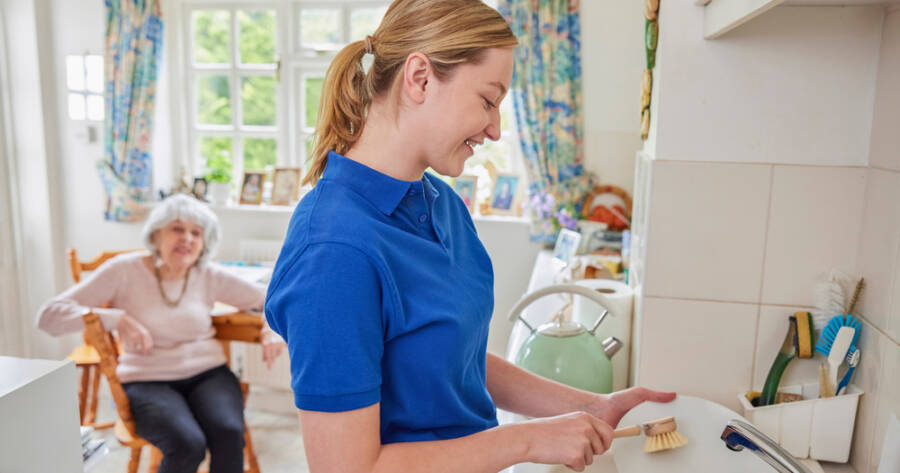
Keeping a home clean can become more difficult with age, illness, or limited mobility, but Medicare’s rules distinguish medical home health care from ordinary household help. In most situations, Original Medicare will not pay someone simply to clean a home. However, certain home health services, some Medicare Advantage benefits, Medicaid programs, and local services may provide related assistance when specific eligibility requirements are met.
Does Original Medicare Pay for House Cleaning?
For routine housekeeping, the answer is generally no. Original Medicare does not cover homemaker services such as shopping or cleaning when those tasks are separate from a Medicare-approved care plan. It also excludes 24-hour home care and custodial assistance when help with everyday activities is the only service a person needs (source).
This means that someone who is having difficulty vacuuming, washing floors, doing laundry, or completing other household chores usually cannot hire a cleaner and submit the bill to Medicare. Age alone does not create eligibility for cleaning assistance, nor does simply finding housekeeping physically difficult.
The situation is different when limited household assistance occurs as part of qualifying home health care. Understanding that distinction can prevent confusion about what Medicare will actually pay for.
When Home Health Aide Care Is Covered
Medicare can cover home health services for people who meet its eligibility rules. Covered care may include intermittent skilled nursing, physical therapy, occupational therapy, speech-language pathology, medical social services, and certain home health aide services (source).
Home health aides can assist with tasks such as bathing, grooming, walking, feeding, and changing bed linens. However, Medicare does not provide this aide benefit simply because a person needs household assistance. The beneficiary must also be receiving qualifying skilled nursing or therapy services at the same time.
In practical terms, changing linens as part of an approved home health visit may be covered, while paying someone to clean the kitchen, dust furniture, and vacuum the entire home generally is not.
Who Qualifies for Medicare Home Health Care?
Eligibility involves more than needing assistance around the house. A health care provider must determine that home health care is necessary, and the beneficiary must need qualifying skilled services on an intermittent basis. The person must also meet Medicare’s definition of homebound (source).
Being homebound does not mean a person can never leave home. Rather, a medical condition must make leaving difficult or require considerable effort or assistance. Medicare also requires covered services to be furnished through a Medicare-certified home health agency.
For eligible beneficiaries, Medicare currently charges nothing for covered home health services, although separate cost-sharing rules can apply to medical equipment (source).
Can Medicare Advantage Cover Cleaning Assistance?
Medicare Advantage plans must provide Medicare-covered benefits but can also offer supplemental benefits beyond Original Medicare. The details vary substantially by plan, location, health status, and eligibility criteria, so housekeeping assistance should never be assumed to be included.
Some plans can provide additional support designed for people with chronic conditions. CMS permits certain Medicare Advantage supplemental benefits to address a member’s home environment when doing so is reasonably expected to support that person’s health or functioning. For example, CMS has previously identified services aimed at reducing environmental triggers in the home as a possible benefit for an eligible person with asthma (source).
These rules do not mean every Medicare Advantage enrollee can receive general house cleaning. A plan may not offer such assistance at all, or it may restrict a related benefit to members who meet particular health requirements. Medicare therefore advises Advantage members to contact their individual plan for details about home health benefits (source).
Medicaid May Provide Broader In-Home Support
For people who qualify financially and medically, Medicaid can sometimes provide household assistance that Medicare does not. Medicaid Home and Community-Based Services programs allow states to offer support intended to help eligible people remain in their homes rather than move into institutional care.
Depending on the state and program, these benefits can include homemaker services, personal care, home health aides, adult day services, respite care, and other non-medical support (source).
Because Medicaid programs are administered by states, there is no single nationwide housekeeping benefit with identical eligibility rules. Applicants need to check their state Medicaid program to determine which services are available, whether enrollment limits apply, and what medical or financial requirements must be satisfied.
Local Aging Programs Can Be Another Option
Medicare and Medicaid are not the only places to look for assistance. Area Agencies on Aging coordinate community services intended to help older adults continue living independently. Depending on local funding and programs, these agencies may connect seniors with homemaker assistance and other in-home support (source).
Availability differs by community, so contacting the local Area Agency on Aging can be particularly useful for someone who needs light housekeeping but does not qualify for Medicare-covered home health care. These agencies may also help families identify other public, nonprofit, or community resources.
How to Determine What House Cleaning Help Is Available
Start by identifying the type of assistance actually needed. Someone recovering from an illness who also requires skilled nursing or therapy should ask a health care provider whether Medicare home health eligibility applies. A Medicare Advantage member should then review the plan’s Evidence of Coverage or contact the insurer directly about supplemental in-home benefits.
If the need is primarily long-term help with household tasks, state Medicaid programs and local aging agencies may offer more relevant options than Original Medicare. The central distinction is that Medicare primarily pays for qualifying health care rather than ordinary housekeeping. Knowing that limitation early makes it easier to focus on programs that are actually designed to provide the household support an older adult needs.