

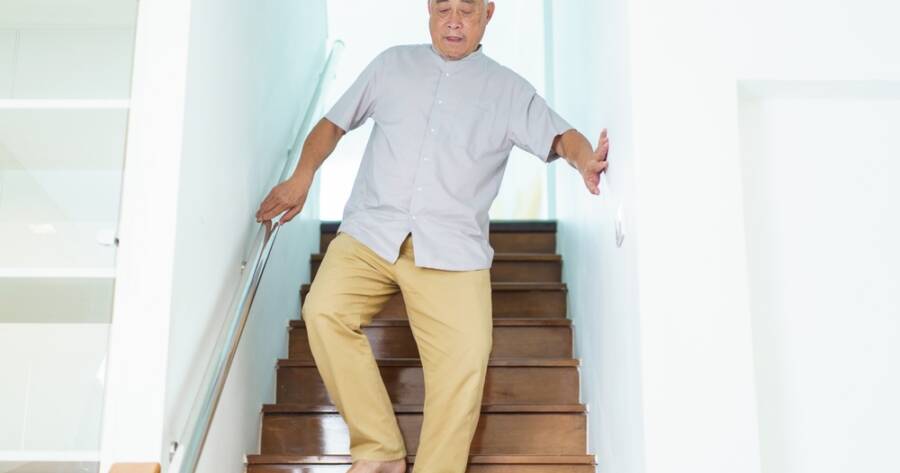
Modern technology is giving older adults new ways to understand, monitor, and train balance without relying only on traditional mobility aids. Some devices are designed for home use, while others help physical therapists and other professionals measure gait or fall risk more objectively. Knowing the difference can help seniors and caregivers decide which type of technology may actually be useful.
Why Balance Technology Matters for Older Adults
Falls remain a major concern with age. More than 14 million adults aged 65 and older report falling each year in the United States, equivalent to about one in four older adults (source). A gadget cannot eliminate that risk, but objective balance measurements can provide information that is difficult to obtain simply by judging how steady someone feels.
Modern devices may measure postural sway, walking speed, weight distribution, or other movement patterns. Some are intended to track changes at home, while more sophisticated systems are designed to help clinicians assess balance and guide rehabilitation.
ZIBRIO Stability Home Scale
The ZIBRIO Stability Home Scale is one of the more accessible examples because it is designed for use at home. Instead of functioning only as a body-weight scale, it measures small movements while a person stands on the platform for 60 seconds. The device then produces a balance score ranging from 1 to 10 (source).
Users can repeat the test over time to see whether their score changes. ZIBRIO also offers the BalanceCoach app, which provides information about factors that may influence balance and includes access to balance-training material. A smartphone is optional, so the scale can still provide its basic measurement without requiring the user to manage an app (source).
This makes it more practical for an older adult who wants a simple home-based way to monitor balance rather than a complex wearable.
FallSkip for Structured Fall-Risk Assessment
FallSkip takes a different approach. It is a sensor-based assessment tool studied specifically in older populations. Rather than continuously monitoring someone throughout the day, the system evaluates performance during a structured movement test and analyzes factors associated with fall risk.
A study involving adults aged 70 and older found that FallSkip produced acceptable measures of feasibility, reliability, and validity and could assess more fall-risk parameters than the traditional Timed Up and Go test (source). This makes FallSkip more relevant as an assessment tool used with professional guidance than as an everyday consumer gadget.
For seniors, that distinction matters. Some technology is useful because it collects information independently at home, while other equipment is most valuable when a physical therapist or clinician interprets the results.
BTrackS Balance Plate
The BTrackS Balance Plate is another professional-grade option. The platform uses force sensors to measure a person’s center of pressure and postural sway while standing. Current BTrackS software can evaluate fall risk, weight distribution, sensory balance, limits of stability, and other measures (source).
The system can also be used for balance-training protocols, providing feedback as a person practices shifting weight or controlling movement. Research comparing the plate with a laboratory-grade force platform found very high agreement and measurement accuracy (source).
BTrackS is therefore less like a fitness tracker and more like portable clinical equipment. It may be encountered in physical therapy, rehabilitation, senior-living, or other professional settings rather than purchased simply as a household gadget.
Mobility Lab for Detailed Gait and Balance Analysis
For a more comprehensive assessment, APDM Mobility Lab combines small body-worn sensors with software that analyzes walking and balance. The current Mobility Lab v2 is a gait-and-balance assessment system with updated algorithms and a redesigned interface (source).
Depending on the test, sensors can be positioned on parts of the body such as the lower back and feet to record movement. The system can calculate measures including walking speed, stride length, cadence, and postural sway. A validation study that included older adults found good-to-excellent agreement for several major gait measurements when Mobility Lab was compared with a pressure-sensor walkway (source).
This type of system is particularly useful when a healthcare professional needs much more detail than a single home balance score can provide.
What to Look for in a Balance Gadget
The best device depends on the goal. Someone who wants to monitor balance periodically at home may prefer a straightforward platform such as the ZIBRIO scale. A person already working with a physical therapist may gain more from a professional system such as BTrackS, FallSkip, or Mobility Lab.
Ease of use also matters. Large displays, short testing procedures, clear results, and minimal setup can make a device more practical for older users. Cost and access should also be considered because many clinical systems are designed primarily for healthcare organizations rather than individual consumers.
Most importantly, balance gadgets should supplement rather than replace professional assessment. New dizziness, repeated falls, sudden weakness, difficulty walking, or rapidly worsening balance deserves medical attention rather than relying solely on a device-generated score.
Using Technology to Support Safer Independence
Modern balance gadgets now range from simple home scales to sophisticated sensor systems used in rehabilitation clinics. ZIBRIO offers convenient home monitoring, while FallSkip, BTrackS, and Mobility Lab provide increasingly detailed professional assessments of stability, gait, and fall risk.
These tools cannot prevent every fall or diagnose every cause of poor balance. Their real value lies in turning balance into something that can be measured, tracked, and discussed. For seniors who want to remain active and independent, that information can provide a useful starting point for conversations about exercise, rehabilitation, and safer everyday movement.