

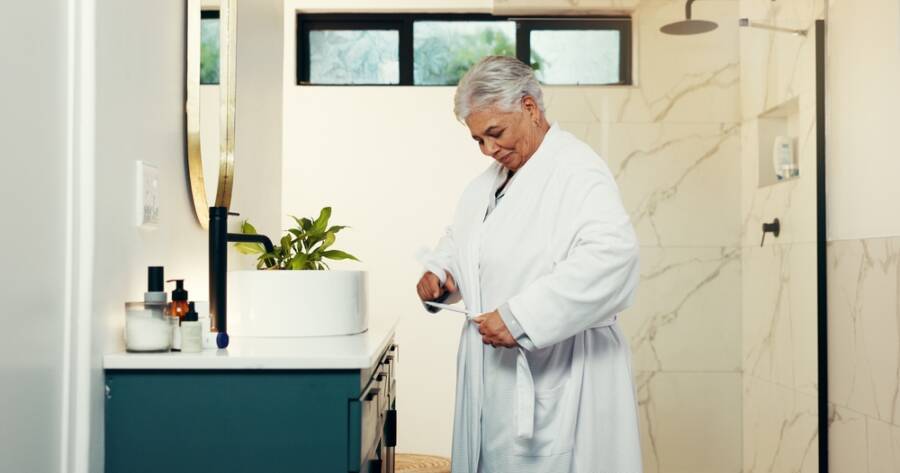
Modern shower chairs can provide added comfort and support without making a bathroom feel overly clinical. Today’s options range from compact adjustable seats to folding designs and built-in benches, giving households more choices for different spaces and mobility needs. Comparing dimensions, stability, weight capacity, materials, and ease of use can help buyers find seating that fits both the bathroom and the person using it.
The Real Reason Shower Chairs Matter
For older adults, the bathroom ranks among the most hazardous rooms in the home. Falls among adults 65 and older led to over 43,000 fatalities in a single year, making them the top cause of injury-related death for that age group (source). What’s more, over 4 million emergency department visits in the same year were connected to older adult falls — a figure that underscores how serious routine activities like showering can become (source).
Beyond the physical dangers, there’s a deeper consequence to consider. Occupational therapist and researcher Ian Rice has stated that “lack of independence in the shower is the number one reason that an individual will be accelerated to a long-term living care facility” (source). That framing shifts the conversation: a shower chair isn’t just about avoiding injury — it’s about preserving the ability to live independently for as long as possible.
Why So Many People Hesitate
Despite the clear safety benefits, many older adults have historically resisted using shower chairs. The reluctance often comes down to stigma — the perception that needing a seat in the shower signals a loss of capability or independence (source). For many, the image of a bulky, hospital-style plastic chair clashing with a well-designed bathroom was enough to dismiss the idea entirely.
But that hesitation is increasingly at odds with what’s actually available. The shower chair market has changed dramatically, and the old stereotypes about clinical, unattractive designs no longer reflect reality. Functionality and aesthetics are no longer competing priorities — they’ve merged.
Modern Shower Chairs Look Nothing Like the Old Ones
The design landscape for shower seating has shifted in meaningful ways. Gone are the days when a shower chair automatically signaled a medical setting or a lack of concern for interior design (source). Modern shower seating is available in many styles, including compact folding seats, streamlined contemporary designs, and bench-style options that can blend more naturally with the overall look of a bathroom (source).
Integrated shower benches, for example, are designed to feel like a permanent and intentional feature rather than an afterthought (source). Wooden shower seats carry a warm, natural quality that makes the bathroom feel more like a private spa than a medical setting (source). For homeowners who take pride in their bathroom’s aesthetic, these modern designs make it far easier to embrace a safety upgrade without compromising the room’s overall style.
Practical Features That Make a Difference
Modern shower chairs don’t just look better — they’re also engineered with real usability in mind. Many models are significantly lighter than older versions, making them easy to move or store, yet they’re built to support substantial weight. One highly rated example weighs just over seven pounds while supporting up to 550 pounds, with a seat height that adjusts across a range suited to most users — and it requires no tools to put together (source).
Comfort is another dimension that often surprises first-time users. Standing in a hot shower actually demands a significant physical effort — comparable, according to one occupational therapist, to performing heavy chore work, swimming, or dancing (source). For anyone managing a health condition, recovering from surgery, or simply dealing with the physical demands of aging, a seated shower option removes that hidden strain and turns a potentially exhausting task into a comfortable routine.
The practical benefits extend to caregivers as well. When someone can shower more safely and independently, the demand on family members or professional aides often decreases. That ripple effect is easy to overlook until it’s felt directly.
Finding the Right Fit for Any Bathroom
Choosing a shower chair involves more than picking the most attractive design. Bathroom size and shower type, whether a walk-in stall, a tub-shower combo, or a curbless tile shower, all influence which style works best. Adjustable height options help accommodate a wider range of users in shared households, while foldable versions suit smaller spaces where storage flexibility matters.
Material choices also carry weight. Teak and bamboo finishes tend to hold up well against moisture while adding a warm visual tone. Aluminum frames offer rust resistance alongside a lighter profile. Acrylic or resin options can deliver a clean, modern look with easy maintenance. The variety means there’s a realistic match for nearly every bathroom style and practical need.
There’s also no requirement that a shower chair be used only by someone with a specific medical need. Athletes recovering from injury, pregnant individuals, and anyone who simply prefers a more relaxed shower experience have discovered the comfort benefits firsthand. The category has quietly expanded beyond its original audience.
Why You Should Learn More About Shower Chairs Today
Shower chairs have evolved far beyond their clinical origins, and the gap between safety and style has effectively closed. With designs ranging from spa-like wood finishes to sleek minimalist forms, a well-chosen shower chair enhances both function and aesthetics.
Falls remain a serious risk for older adults, and maintaining bathroom independence plays a direct role in long-term quality of life (source). Proven preventive measures exist, and bathroom safety tools rank among the most effective. Exploring the full range of modern shower chair options, across design, material, and function, is a worthwhile step for any household where comfort, safety, or independence is a priority.