

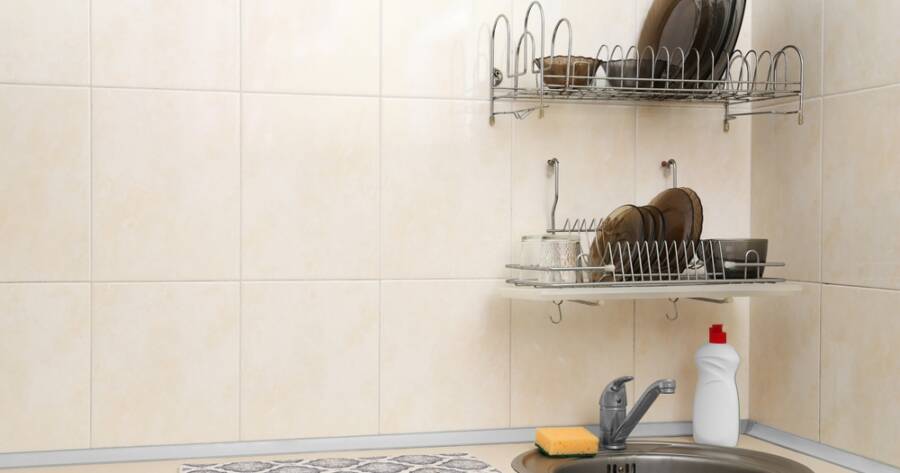
Traditional dish racks have been a kitchen staple for decades, but their bulky designs can take up valuable counter space and create unnecessary clutter. Recently, homeowners are finding sleeker, more practical alternatives that improve drainage, maximize available space, and complement modern kitchen styles. From over-the-sink racks to innovative drying mats, modern solutions offer fresh approaches to everyday dishwashing.
The Problem With Traditional Dish Racks
For decades, the bulky dish rack sitting beside the kitchen sink was simply accepted as a necessary inconvenience. It took up a significant chunk of counter real estate, often rivaling the footprint of common kitchen appliances like toasters and blenders, and it came with a host of hygiene concerns that many people overlooked (source). Water pooling at the base of a standard rack creates the kind of persistently damp environment where bacteria thrive, raising the risk of food-borne illness over time (source).
Beyond hygiene, the visual impact is hard to ignore. Even in otherwise well-organized kitchens, a large plastic or metal dish rack loaded with wet plates, cups, and utensils creates a sense of visual clutter. Interior designers and homeowners alike have started pushing back against this accepted norm, seeking out alternatives that address both the aesthetic and the practical shortcomings of the traditional countertop rack (source).
Over-the-Sink Racks: A Smarter Use of Space
One of the most popular replacements gaining traction across modern American kitchens is the over-the-sink dish rack. Rather than occupying precious counter space, these racks bridge the sink basin entirely, positioning dishes directly above it so that water drains straight down without leaving wet patches on the counter or requiring a separate drip tray (source). The result is a tidier, more streamlined kitchen surface that remains functional for food prep at all times.
Many over-the-sink models also offer adjustable heights and expandable frames, making them adaptable to a range of sink sizes and kitchen layouts (source). For those who cook frequently and need every inch of counter space available, this type of rack eliminates the constant shuffle of moving a drainer out of the way before starting a meal. The design philosophy is straightforward: work with the sink rather than around it.
Wall-Mounted and Cabinet-Integrated Options
For homeowners looking to take things a step further, wall-mounted dish drainers and cabinet-integrated systems offer an even more design-forward approach. Wall-mounted racks lift dishes entirely off both the counter and the sink, creating vertical storage that aligns with open-concept kitchen aesthetics while promoting better airflow around dishes (source). That improved circulation means dishes dry more quickly and bacteria has less opportunity to accumulate.
Interior designers have increasingly recommended installing a dedicated cabinet directly above the sink fitted with a built-in draining rack, where dishes can drip-dry inside the cupboard and are ready to put away once completely dry (source). Pot rails and slimline hanging storage systems have followed a similar trajectory, appearing in contemporary kitchen renovations and high-profile home designs as a way to balance everyday practicality with a polished, intentional look (source).
Innovative Drying Pads and Folding Racks
Not every household requires a permanent drying structure, and the market has responded with flexible solutions designed for smaller kitchens or those who prefer a minimalist setup. Folding dish racks, storable drying mats, and diatomaceous earth dish pads have all emerged as credible alternatives that can be tucked away when not in use (source).
Diatomaceous earth, a naturally absorbent material derived from fossilized microalgae, has attracted particular attention for its ability to draw moisture away from dishes rapidly while actively resisting microbial growth (source). Unlike conventional microfiber mats or plastic drip trays, which tend to become waterlogged and develop unpleasant odors, diatomaceous earth pads maintain their performance without constant cleaning. Products built from this material have been noted as a far superior alternative to older-style mats that get waterlogged, smelly, and require frequent maintenance (source).
Modular and expandable rack designs have also earned praise for their versatility. Racks with adjustable configurations allow users to accommodate everything from a single mug to a full load of dinner plates, then collapse the frame down to a compact size for storage. This adaptability makes them especially well-suited to apartment kitchens or any space where flexibility matters as much as function (source).
Why Design and Hygiene Are Driving the Shift
The movement away from traditional dish racks is not simply about aesthetics, though the visual appeal of a clutter-free counter is certainly part of the appeal. Hygiene concerns have played an equally important role in pushing homeowners toward newer solutions. Standing water and poor airflow are the two main conditions that allow bacteria to multiply on dish rack surfaces, and every modern alternative currently gaining popularity addresses at least one of those factors (source).
At the same time, the rise of open-concept kitchen designs has raised the standard for how functional items are expected to look within a space. Dish drying equipment that once lived out of sight in a separate utility area now sits in full view, making the visual design of these products as important as their performance. Manufacturers have responded with materials like stainless steel, matte black finishes, and natural stone alternatives that complement contemporary kitchen styles rather than clashing with them.
Why You Should Learn More About Modern Dish Drying Solutions
The shift away from bulky, bacteria-prone dish racks reflects a broader transformation in how homeowners think about kitchen organization, hygiene, and design. Over-the-sink models reclaim counter space and eliminate drainage problems. Wall-mounted and cabinet-integrated options take organization vertical, improving airflow and drying times. Compact alternatives like diatomaceous earth pads and folding racks serve those who prefer flexible, low-profile setups.
Each of these solutions tackles the core weaknesses of the traditional dish rack from a different angle, giving homeowners more choice than ever before. As kitchen design continues to evolve toward cleaner surfaces and smarter use of space, exploring the full range of modern dish drying options is a worthwhile step for anyone looking to upgrade one of the most frequently used areas of the home.