

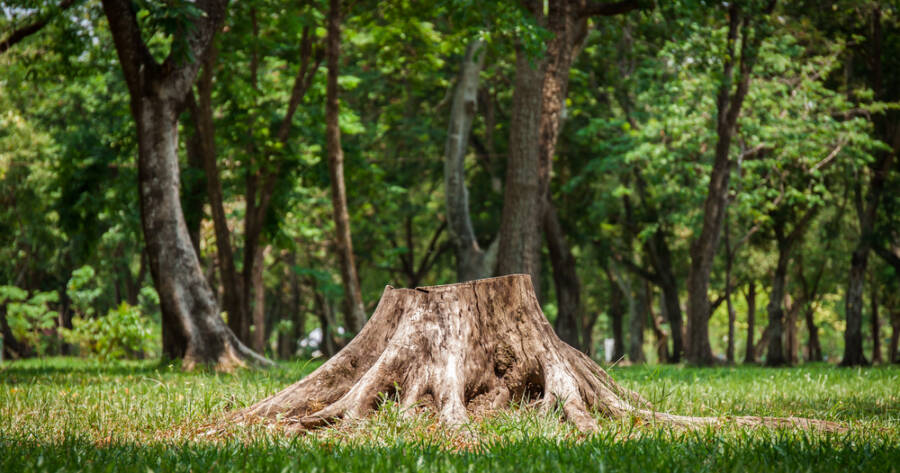
Removing a leftover tree stump can be as simple as hiring a grinder or as hands-on as digging it out yourself, but each method comes with different costs, timelines, and levels of effort. Professional grinding, accelerated decay, and manual removal are three common options, and the best choice depends largely on stump size, budget, and how quickly the area needs to be cleared.
Why Tree Stump Removal Matters
A stump that sits in a yard long after a tree has been cut down does more than look untidy. Over time, decaying stumps can attract termites, beetles, and other wood-boring insects that may eventually spread to nearby structures. They also take up valuable lawn and garden space, interfere with mowing, and can create uneven ground that poses a safety risk. Whether someone wants a clean yard for aesthetic reasons or practical ones, addressing leftover stumps sooner rather than later is generally the better path.
There are three main approaches most homeowners and arborists rely on when dealing with stumps: professional grinding, chemical treatment, and manual removal. Each method carries its own advantages and limitations depending on the size of the stump, the available budget, and how quickly results are needed.
1. Stump Grinding: The Fast and Professional Option
Among all the available techniques, professional stump grinding is widely regarded as the most efficient route. A trained arborist uses a machine equipped with a rotating cutting disk that chews through the wood, reducing the stump to well below the surface level (source). The process typically brings the stump down to a depth of eight to twelve inches underground, and in most cases the entire job wraps up within a few hours (source).
One of the biggest advantages of grinding is speed. There is no waiting weeks or years for biological processes to take effect. The stump is mechanically destroyed, leaving behind a pile of wood chips that can be repurposed as mulch or disposed of. Because professional equipment handles the heavy lifting, the risk of injury to the homeowner is minimal. Grinding is also generally less expensive than full stump extraction, which involves removing the entire root ball from the ground (source).
The primary consideration with grinding is that the roots themselves remain underground and will gradually decay on their own. For most residential situations, this is entirely acceptable. However, anyone hoping to plant another tree in the same location should plan carefully. Remaining roots, wood debris, altered soil conditions, and potentially lingering disease or pest problems can make the old planting site difficult for a young tree. Iowa State University recommends choosing a new site when possible, ideally several feet away from the former stump (source).
2. Chemical Treatment: A Patient Approach to Decay
For property owners who prefer a lower-cost solution and are not in a rush, chemical stump treatment offers a viable alternative. This method involves drilling multiple holes into the stump, each roughly an inch wide and spaced no more than twelve inches apart and at least ten inches deep, then introducing a chemical or fertilizer compound to accelerate the natural breakdown of the wood (source).
Slow-release fertilizers high in nitrates are commonly used to feed wood-decay fungi and speed up decomposition. With this approach, a stump that might otherwise take more than a decade to rot on its own can break down enough to be removed in one to three years (source). Commercial chemical stump removers work similarly, introducing a solution that accelerates the decomposition process, though the timeline can still stretch to several weeks or months before the stump softens enough for complete removal (source).
The trade-off with chemical treatment is time. It demands patience and consistent maintenance. It is also worth noting that chemical products may not be ideal in every environment, particularly in areas near gardens, water sources, or where pets and children regularly play. Selecting the right product and applying it carefully according to instructions is essential for safe and effective results.
3. Manual Removal: Physical Work, Chemical-Free Results
Manual stump removal is the most labor-intensive of the three methods, but it appeals to those who want a completely chemical-free approach. The process involves digging around the stump with shovels, cutting through lateral roots with axes or saws, and using a pry bar to lever the stump out of the ground (source).
This technique works best on smaller stumps, specifically those with a diameter under twelve inches and root systems that do not extend too deeply or spread too widely (source). A trench dug one to two feet around the stump provides the working space needed to access and sever the anchoring roots before the stump can be pried free. Manual removal has the advantage of leaving no chemicals in the soil and fully extracting the stump along with a significant portion of the root structure.
The downside is the physical demand the work places on the person doing it. For large stumps or those with deep, extensive root systems, manual removal quickly becomes impractical. It is best reserved for situations where the stump is small, the soil conditions are workable, and the homeowner has the tools and physical capacity to see the job through. Matching the method to the size and complexity of the stump is a key factor in choosing among all three approaches (source).
Why You Should Learn More About Tree Stump Removal Today
Each stump removal method serves a different need. Professional grinding delivers fast, reliable results with minimal physical effort. Chemical treatment suits those with a longer timeline and a preference for lower upfront costs. Manual removal offers a chemical-free solution for small stumps where full extraction is the priority. The right choice depends on the size of the stump, budget, timeline, and personal preferences about chemicals and physical labor.
Taking the time to understand these differences allows property owners to approach the task with confidence, save money where possible, and achieve a cleaner, safer yard. Consulting with a certified arborist can also provide valuable insight tailored to a specific property’s needs.