

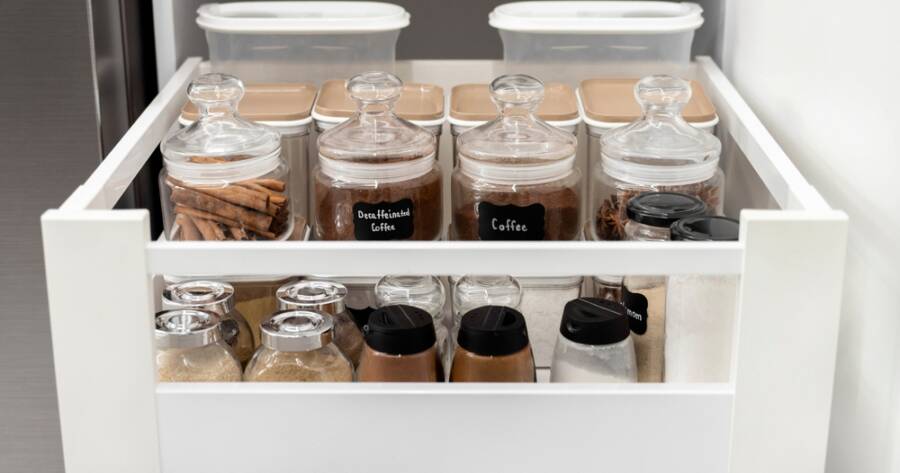
A well-organized kitchen can make cooking, cleaning, and everyday routines feel much easier, even when storage space is limited. Smart use of cabinets, drawers, pantry shelves, doors, and unused vertical areas can help reduce clutter without requiring a renovation. A few practical storage changes can make tools and ingredients easier to reach while helping the entire kitchen function more efficiently.
The Foundation of an Organized Kitchen
Every efficient kitchen starts with a clear understanding of how the space is actually used. Before purchasing bins, racks, or organizers, it helps to take inventory of what is stored, what gets used daily, and what rarely sees the light of day. Items that sit untouched for months should be relocated or donated, since holding onto rarely used equipment quietly consumes valuable cabinet and countertop real estate.
Once the clutter is reduced, placing the most frequently reached-for items in the most accessible spots makes a measurable difference in day-to-day efficiency. As IKEA’s kitchen organization resource notes, “a pro-tip is to put things you use the most as accessible as possible. That way you get more easy-going kitchen routines” (source). Pots and pans used every evening belong within arm’s reach of the stove, while specialty tools can live in harder-to-reach corners.
Smarter Cabinet Organization
Cabinets are the backbone of kitchen storage, yet most people underutilize the vertical space inside them. Adjusting shelf heights to fit what is actually stored there prevents wasted air space above shorter items. Shelf risers and stacking organizers allow a single cabinet to hold twice as much by creating usable tiers within the same footprint.
According to professional organizer Katie McMenamin Sabo, “organizing kitchen cabinets by adjusting the shelves and using shelf risers takes patience, but being able to grab a dinner plate without moving the salad plates makes life so much easier” (source). This kind of deliberate stacking and separation prevents the common frustration of having to unstack half a cabinet just to reach one item.
Cabinet doors are another frequently overlooked surface. Installing hooks or slim racks on the inside of pantry or cabinet doors creates storage for pan lids, measuring spoons, foil boxes, and plastic wrap without occupying any shelf space (source). This approach is especially useful in smaller kitchens where every square inch matters.
Drawer Solutions That Actually Work
Drawers tend to become catch-all spaces without a clear organizational system. Dividers and compartmentalized trays solve this problem by assigning specific spots to utensils, cutlery, and small tools, preventing the pile-up that makes drawers difficult to search through. Clear compartments are particularly helpful because they allow a quick visual scan instead of digging around.
For kitchens with deep drawers, a second interior drawer or a stacked insert system can effectively double the usable space. IKEA highlights that “You can get more use of your drawer space with another drawer inside,” and you can “optimize organization with drawer dividers or cutlery trays, and you probably can’t get much better storage efficiency” (source). This method keeps categories separated while making the most of the full drawer depth.
Pantry and Dry Goods Organization
Pantry spaces often become cluttered because food packaging is designed for retail shelves, not home storage. Transferring dried goods like grains, pasta, and cereals into airtight containers immediately reveals how much shelf space the original boxes and bags were actually consuming (source). Uniform containers also stack more neatly and allow for clear labeling, which speeds up cooking prep considerably.
Pull-out pantry organizers take this a step further by making items stored at the back of deep shelves far more accessible. IKEA’s pull-out pantry system, for example, uses a door basket paired with a cabinet basket that extends automatically when the door opens, so nothing gets buried out of reach (source). This kind of hardware can completely change how a pantry functions on a daily basis.
Zone-Based Organization for the Whole Kitchen
One of the most effective strategies for maintaining kitchen organization over time is dividing the space into functional zones. Designer Shea McGee uses this method by keeping utensils and cutting boards near a dedicated prep area, while dish soap, towels, and sponges are grouped near a cleaning station (source). When everything has a logical home tied to where it gets used, putting things away becomes automatic rather than a chore.
Zone-based thinking also extends to cabinets and drawers. Baking supplies can be grouped together in one area, while everyday dinnerware occupies another. This prevents the overlap and confusion that comes when similar-use items are scattered throughout the kitchen. Over time, these zones reduce the mental energy required to cook or clean up, since the layout itself communicates where everything belongs.
Why You Should Learn More About Practical Kitchen Storage Solutions
Transforming a disorganized kitchen does not require a full renovation or a large budget. Small, intentional changes like adding shelf risers, using drawer dividers, switching to airtight containers, and mapping out zones can dramatically improve how a kitchen functions every day. These practical strategies reduce the time spent searching for tools and ingredients, lower daily stress, and make the cooking process more enjoyable.
Whether starting with a single cluttered drawer or overhauling an entire pantry, the principles of smart storage scale to fit any kitchen size or layout. A more organized kitchen is one of the simplest improvements a household can make for long-term comfort and efficiency.