

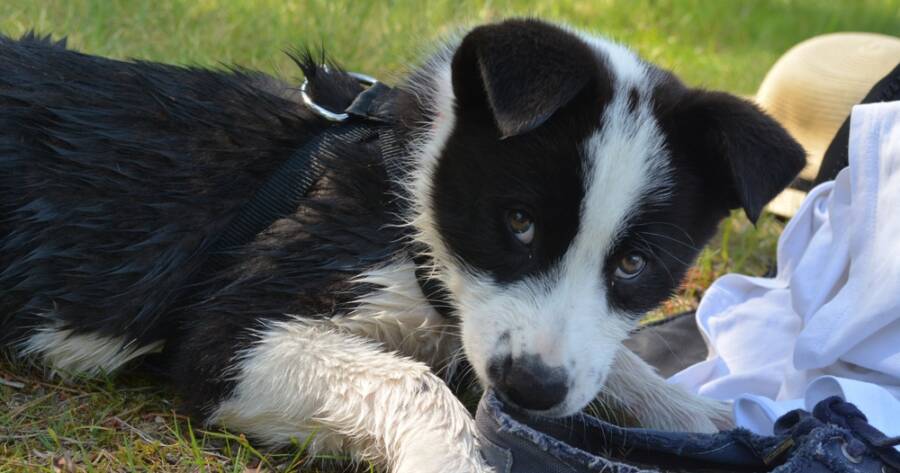
The Karelian Bear Dog represents one of Finland’s most distinctive hunting breeds, known for courage and independence. At four weeks of age, puppies experience remarkable developmental changes that mark their transition from helpless newborns to interactive, aware young dogs. Understanding early milestones helps owners recognize normal progression and address any concerns promptly.
Physical Development at Four Weeks
At the four-week mark, Karelian Bear Dog puppies undergo significant physical transformations. These medium-sized spitz puppies begin demonstrating the sturdy build and triangular-shaped head characteristic of the breed (source). Their bodies become more coordinated as muscles strengthen and motor skills develop rapidly during this period.
One of the most notable achievements at four weeks involves mobility. Puppies can walk with increasing steadiness, moving beyond the crawling and wriggling movements of earlier weeks (source). This newfound ability to navigate their environment marks a crucial step toward independence. The puppies’ coordination improves daily, allowing them to explore their surroundings with growing confidence.
The dental development occurring at this age brings another significant change. Those super-sharp puppy teeth begin emerging through the gums, preparing the young dogs for their eventual transition to solid food (source). This teething process may cause some discomfort, leading puppies to chew on objects within reach.
Sensory System Maturation
The sensory development occurring between two and four weeks transforms puppies from largely unaware newborns into alert, responsive individuals. During the first three weeks of life, Karelian Bear Dog puppies remain unable to see, hear, or smell, spending most of their time sleeping (source). The period leading up to four weeks brings dramatic changes as these critical senses activate.
Vision develops as the eyes open, allowing puppies to perceive shapes, movements, and eventually recognize faces. The sense of hearing emerges, enabling puppies to respond to sounds in their environment. Most notably for this breed, the sense of smell begins developing during this timeframe. This sensory capability holds particular importance for Karelian Bear Dogs, as the breed possesses keen senses with an especially well-developed sense of smell that serves them throughout their hunting careers (source).
Behavioral and Social Milestones
The behavioral changes at four weeks reflect the puppies’ growing awareness and social capabilities. Karelian Bear Dog puppies may start to bark and wag their tails at this age, demonstrating early communication skills (source). These vocalizations and physical expressions represent the beginning of complex communication patterns that will develop throughout their lives.
Social interaction intensifies dramatically during this period. Between two and four weeks, puppies begin interacting meaningfully with their littermates and their mother (source). These interactions teach fundamental lessons about boundaries, play behavior, and canine social structures. Littermates wrestle, mouth each other gently, and learn bite inhibition through these early encounters.
The puppies’ temperament characteristics begin emerging during this developmental stage. Even at four weeks, observers may notice signs of the reserved but stable temperament that defines adult Karelian Bear Dogs (source). Individual puppies may display varying levels of confidence, curiosity, or caution when exploring new situations.
Independence and Self-Sufficiency
A particularly important milestone occurs around four weeks concerning elimination behaviors. Before this age, puppies require stimulation from their mother to eliminate waste. After the four-week mark, they can accomplish this biological function independently (source). This development represents a significant step toward self-sufficiency and simplifies care requirements.
This growing independence extends beyond physical functions. Four-week-old Karelian Bear Dog puppies show increased curiosity about their environment and begin investigating objects, sounds, and spaces without constant maternal oversight. The independent nature that characterizes adult dogs of this breed begins manifesting in subtle ways during these early weeks (source).
Coat Development
At four weeks, the puppy coat begins showing characteristics that will define the breed’s appearance. Karelian Bear Dogs possess a double coat of medium length, featuring a coarse, straight outer coat and a thick, soft, dense undercoat (source). While the full adult coat takes months to develop, the foundation layers become apparent during this early period.
The characteristic black or black and white coloring of the breed becomes more distinct as the coat develops (source). Puppies display the color patterns they will carry into adulthood, though the texture and density of the coat will continue changing as they mature.
Nutritional Transition Beginning
The four-week milestone often signals the beginning of dietary transitions. With teeth emerging and growing independence, puppies start showing readiness for foods beyond maternal milk. Breeders typically introduce moistened puppy food during this period, gradually transitioning the litter toward solid nutrition over subsequent weeks.
This nutritional shift supports the rapid growth and high energy demands of developing puppies. The breed’s eventual size, with males reaching heights of approximately 21 to 23 inches and females ranging from 19 to 21 inches, requires proper nutrition from these early stages (source). Adequate nutrition during the four-week period and beyond lays the groundwork for healthy adult development.
Personality Traits Emerging
Even at four weeks, careful observers may detect early signs of the personality traits that define adult Karelian Bear Dogs. The breed exhibits devotion to their handlers, strong hunting instincts, and keen senses (source). While these characteristics fully manifest later, puppies may show varying levels of responsiveness to human interaction and differing degrees of focus on scents and sounds.
The courage and persistence that characterize adult dogs of this breed remain largely undeveloped at four weeks, but individual puppies may display boldness when investigating new stimuli. The breed’s self-confidence develops gradually throughout puppyhood, with foundations laid during these critical early weeks (source).
Health Considerations
Four-week-old Karelian Bear Dog puppies require attentive health monitoring. The immune system remains developing, making puppies vulnerable to infections and illnesses. Proper sanitation, maternal care, and environmental temperature control remain essential during this stage.
Veterinary professionals often recommend initial health examinations around the four-week mark. These checkups assess developmental progress, identify any congenital issues, and establish baseline health records. Deworming protocols typically begin during this timeframe, addressing common intestinal parasites that affect young puppies.
Why You Should Learn More About Karelian Bear Dogs Today
The four-week developmental stage represents just one phase in the remarkable journey from newborn puppy to mature Karelian Bear Dog. Understanding these early milestones provides valuable insights into breed-specific development patterns and helps owners recognize both normal progression and potential concerns. The Karelian Bear Dog’s unique characteristics, from their dense double coats to their exceptional hunting abilities, begin taking shape during these formative weeks.
Knowledge about this breed’s developmental timeline, combined with understanding their adult traits such as their reserved temperament, devotion, and strong hunting instincts, enables prospective and current owners to provide optimal care throughout the dog’s life. The breed’s life expectancy of 11 to 13 years means that understanding proper development from puppyhood contributes to long-term health and well-being (source). Exploring comprehensive resources about this distinctive Finnish breed enriches the ownership experience and supports responsible breeding and raising practices.