

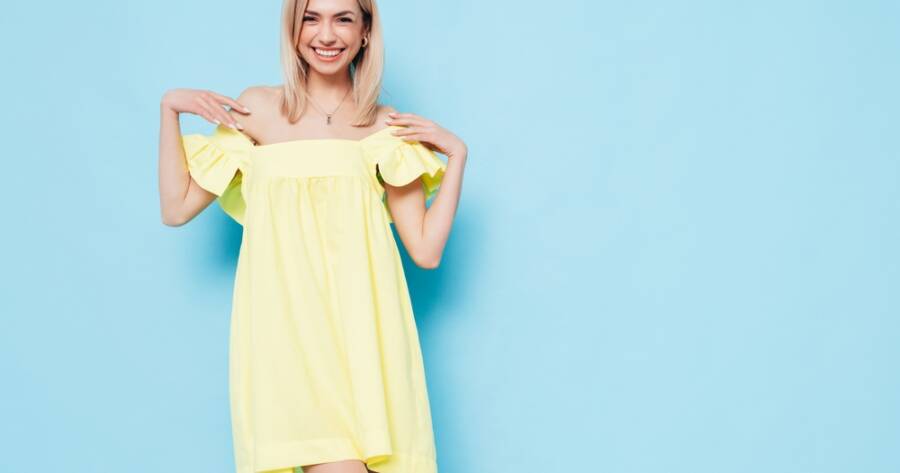
Fashion rarely leaves a good idea behind for long, and 2026 is bringing several familiar dress styles back into focus. Designers are revisiting fitted silhouettes, romantic details, playful proportions, and pared-back looks associated with earlier decades. The difference is in the execution, with updated fabrics, lengths, and styling giving recognizable shapes a distinctly current feel.
Bodycon Dresses Return With a More Refined Look
Bodycon dresses are back in a noticeable way for 2026, but the latest versions are not simply repeating the skin-tight styles associated with earlier trend cycles. Designers are giving close-fitting dresses cleaner lines, longer lengths, strategic ruching, and more polished fabrics, creating a silhouette that feels sleek rather than overly revealing.
Harper’s Bazaar identified bodycon as one of the major dress trends for summer 2026, pointing to designers including Tom Ford as evidence of the silhouette’s return (source). Vogue’s Fall 2026 coverage also highlighted body-skimming dresses at labels such as Gucci and Victoria Beckham, showing that fitted shapes are continuing beyond the warmer months (source).
Babydoll Dresses Are Back in a Grown-Up Way
The babydoll dress is another familiar silhouette getting renewed attention. Known for its loose shape, shortened hemline, and youthful proportions, the style has appeared in many different forms over the decades. In 2026, designers are making it feel more polished through elevated fabrics, refined necklines, and less overtly sweet styling.
Chloé is among the labels helping revive the shape, while current trend coverage points to babydoll dresses as a replacement for some of the simpler shift dresses that dominated previous seasons. The updated versions can still include ruffles, bows, or soft volume, but they are often balanced with streamlined accessories and sophisticated fabrics that make the silhouette feel less juvenile (source).
Drop-Waist Dresses Bring Back Jazz Age Proportions
Dropped waists have been building momentum for several seasons, and 2026 has pushed the silhouette even further into the mainstream. Instead of defining the waist at its natural point, these dresses extend the torso before moving into a fuller or straighter skirt, immediately recalling shapes associated with the 1920s and later revivals.
Fall 2026 collections from Chanel, Dior, Alaïa, Lacoste, and Saint Laurent all featured lowered waistlines. Vogue connected the trend partly to renewed interest in Jazz Age and Art Deco references, while also noting that designers were using the shape in ways that went beyond literal flapper styling. The result is a vintage-inspired proportion that can still feel surprisingly modern (source).
’90s Minimalist Dresses Make Another Comeback
Not every 2026 revival is dramatic. Some of the season’s strongest dresses are drawing from the stripped-back minimalism that defined much of the late 1990s. Thin straps, square necklines, simple sheath shapes, muted colors, and body-aware cuts are returning as designers move away from overly complicated details.
Calvin Klein, Alaïa, The Row, and Gucci all showed versions of the look for Fall 2026. The appeal lies in how little the dresses need to do. A clean neckline and precise cut can carry the entire outfit without heavy embellishment, making the revival especially attractive to people who prefer understated dressing (source).
Lace Dresses Return Beyond Special Occasions
Lace has long moved in and out of fashion, but 2026 is giving the material another major moment. Instead of appearing only on bridal gowns or eveningwear, lace is showing up across full dresses, layered looks, slips, and more contemporary silhouettes.
Vogue highlighted head-to-toe lace as a key Fall 2026 dress direction, with designers including Khaite, Saint Laurent, Gabriela Hearst, JW Anderson, and others using the fabric in different ways. Some looks lean romantic and delicate, while others pair lace with heavier shoes or sharper styling to create contrast. That versatility is helping an old-fashioned fabric feel much less predictable (source).
Ruffles Come Back With More Structure and Volume
Ruffles are another detail making a strong return in 2026. The look has clear connections to the exaggerated dressing of the 1980s, but current versions range from soft and romantic to sculptural and architectural. Designers are using tiers, folds, and oversized fabric treatments to add movement without automatically making a dress feel overly formal.
Alaïa, Tory Burch, Dior, Carven, and Altuzarra were among the labels using ruffled details in Fall 2026 collections. Vogue noted that some designers piled on volume while others used smaller pleated treatments that followed the body more closely. The revival shows how a familiar decorative element can shift dramatically depending on proportion and styling (source).
Bubble Hems and Playful Proportions Are Still Evolving
Bubble hems have not disappeared after their earlier comeback. For Fall 2026, designers continued experimenting with rounded hems, full skirts, dropped waists, and exaggerated proportions. Rather than appearing only as short party dresses, the bubble idea is being worked into midi lengths and more sculptural shapes.
Vogue’s Fall 2026 dress report grouped bubble hems with other playful proportion trends seen at Khaite, Jil Sander, Magda Butrym, Toteme, and other labels. The continued presence of the silhouette suggests that what initially looked like a quick nostalgic revival is developing into a broader interest in dresses that create shape through volume rather than tight tailoring (source).
Why Familiar Dress Styles Feel Fresh Again in 2026
The biggest dress comebacks of 2026 aren’t exact copies of what people wore decades ago. Bodycon silhouettes are more polished, babydoll dresses feel more grown-up, and ’90s minimalism is being reconsidered alongside lace, ruffles, and exaggerated volume. Designers are borrowing recognizable ideas while changing the proportions, fabrics, and styling around them.
That mix of nostalgia and reinvention is what makes the current dress cycle interesting. A style can reference the 1920s, 1980s, or 1990s without looking like a costume from the period. For shoppers, the renewed variety also means there are comeback trends for very different tastes, from understated minimalism to full-volume statement dressing.