

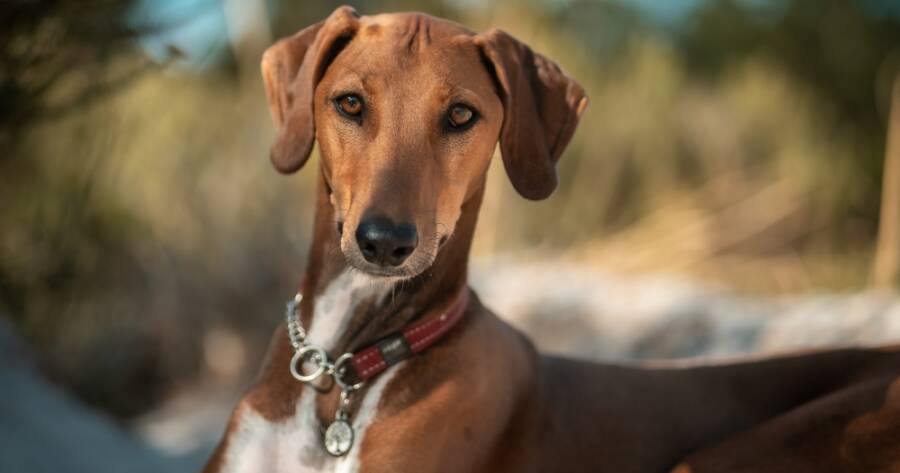
Azawakh puppies are among the rarest and most striking young dogs a person can encounter in the United States. At just four weeks old, these West African sighthounds already hint at the lean, elegant adults they will become — making this early window of development especially fascinating.
An Ancient Breed With a Distinctive Appearance
The Azawakh traces its origins to the Sahel region of West Africa, specifically the countries of Burkina Faso, Mali, and Niger (source). This heritage gives the breed a look unlike almost any other dog found in American homes. The typical adult Azawakh stands between 23 and 29 inches tall at the shoulder and carries a weight of roughly 35 to 50 pounds, making it a tall but surprisingly lightweight animal (source). Even in puppyhood, the foundations of that long-legged, deep-chested frame begin to take shape.
The breed’s silhouette is often compared to that of a greyhound, sharing long limbs and a narrow, tucked body (source). The coat is short and fine, and it can appear in a wide spectrum of colors including red, fawn, black, brown, blue, brindle, and parti-color combinations (source). These color variations are visible even on very young puppies, giving each litter a visually diverse appearance that captures the attention of anyone lucky enough to see one.
What Azawakh Puppies Look Like at 4 Weeks
At the four-week mark, Azawakh puppies undergo some of the most significant physical and behavioral changes of their early lives. Their eyes have opened, their senses are rapidly developing, and they are beginning to interact meaningfully with their littermates and mother (source). For a breed that grows into such a visually dramatic adult, this stage offers a remarkable preview of what is to come.
Physically, a four-week-old Azawakh puppy already carries the hallmarks of the sighthound body type in miniature form. The legs appear long relative to the torso, the chest shows early signs of depth, and the short, fine coat displays its characteristic texture and color. Because the Azawakh is so lean in adulthood — with bone structure and musculature visible beneath the skin even in a healthy adult — the slim build of a four-week-old puppy is not a cause for concern but rather a defining trait of the breed (source).
By this age, puppies have gained enough coordination to walk on their own and may begin to vocalize more clearly, with some even attempting to bark (source). Another milestone reached around this time is physical independence — four-week-old puppies no longer require their mother’s stimulation to eliminate on their own (source). The first sharp puppy teeth also begin to emerge at this stage, a sign that weaning will soon become part of the developmental process (source).
Rarity and the Challenge of Finding an Azawakh Puppy
Azawakhs are not commonly seen across the United States. The breed did not arrive in American homes until the mid-1980s, and it has been tracked through the AKC’s Foundation Stock Service since 1997 (source). Even today, breeders are few in number, and prospective owners often find themselves placed on waiting lists that can stretch for an extended period before a puppy becomes available (source).
This scarcity makes seeing a four-week-old Azawakh puppy a genuinely rare experience. Most people who encounter the breed do so through photographs or videos shared by dedicated breeders, which is part of why early-stage images of these puppies generate such strong interest among dog enthusiasts. The combination of an exotic origin, a striking physical form, and extremely limited availability in the United States makes every litter of Azawakh puppies noteworthy.
Temperament and Early Socialization
Beyond their appearance, Azawakh puppies carry behavioral traits that will define their adult personalities. These dogs form deep bonds with people, and experts note that introducing them to a family during puppyhood is the most effective path to a lasting connection — adult Azawakhs may struggle to transfer their loyalty when placed in a new home later in life (source). The four-week stage, when puppies first begin exploring social interactions with their littermates and the humans around them, lays a critical foundation for this future bonding.
The socialization window that opens around four weeks is important for any dog, but it carries special weight for a breed like the Azawakh, which tends toward loyalty with a reserved quality around strangers. Early positive exposure to human contact and gentle handling helps shape a puppy that will grow into a confident and affectionate companion rather than a timid or overly cautious adult. Breeders who specialize in the Azawakh understand this, which is why responsible breeding programs pay close attention to what happens in those earliest weeks of a puppy’s life.
Why You Should Learn More About Azawakh Puppies
Seeing an Azawakh puppy at four weeks reveals something remarkable — even at this early stage, the breed’s elegance, lean structure, and distinctive coat colors are already apparent. For those drawn to rare sighthounds with deep historical roots, the Azawakh represents one of the most visually unique breeds available. Understanding both the physical development and the temperamental needs of these puppies helps prospective owners make informed decisions about whether this extraordinary breed is the right match for their household. Given how rarely litters become available across the United States, anyone serious about the Azawakh should begin learning about the breed well in advance of seeking a puppy.