

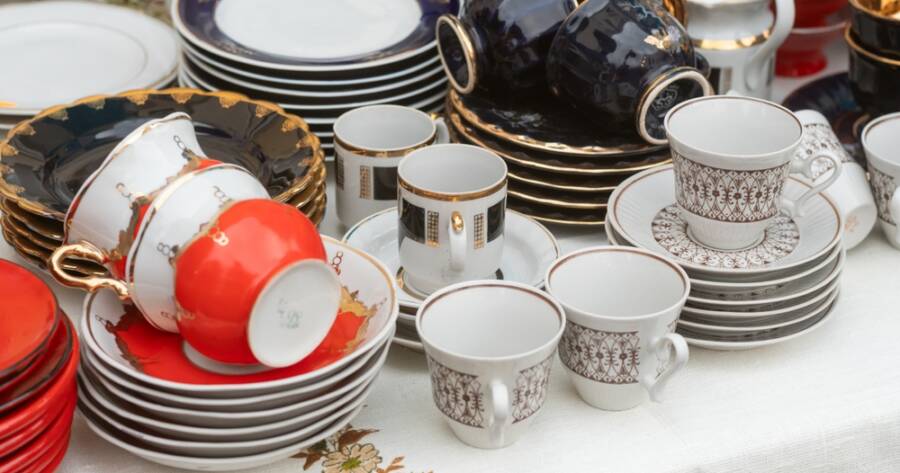
Antique dishes can range from inexpensive thrift-store finds to rare porcelain worth extraordinary sums, but age alone doesn’t make a piece collectible. Makers, patterns, craftsmanship, condition, and scarcity all influence what buyers value. Learning which names and styles consistently attract attention can make it easier to recognize dishes that deserve a closer look before they are overlooked.
What Makes Antique Dishes Worth Collecting
Not every old plate sitting in a cabinet is a hidden treasure, but some antique dishes command extraordinary prices at auction. The factors that determine value are interconnected and must be weighed together rather than examined in isolation. Brand reputation, pattern design, country of origin, and age all work collectively to shape what a dish is actually worth on the collector’s market (source).
Condition plays an enormous role as well. A complete set of dishes in excellent shape will consistently outperform individual pieces that show chips, cracks, or fading. Collectors who understand this principle are better positioned to evaluate whether a purchase represents genuine value or simply an aged piece with limited appeal.
Expert insight from the fine art world adds further clarity on what drives desirability. According to 1stDibs’ Anthony Barzilay Freund, key value factors include whether a plate is “hand-painted or gilt decorated, created by a renowned porcelain or ceramic maker known for exceptional quality pieces, or in a pattern or style of dish that is a timeless collector’s favorite or appeals to current tastes or fashion” (source). This framework gives collectors a reliable starting point when assessing unfamiliar pieces.
Iconic Patterns and Makers That Collectors Prize
Certain names in the world of antique dishes have become synonymous with high collector demand. Royal Copenhagen stands out as one of the most celebrated porcelain makers, particularly for its Flora Danica pattern. Originally commissioned by the Danish royal court in 1790 as an intended diplomatic gift, this pattern is distinguished by its intricate botanical illustrations and a delicately trimmed gold rim that consistently attracts premium prices at auction (source).
Discontinued patterns from prestigious manufacturers also tend to generate heightened interest among serious collectors. Bernardaud’s Chenonceaux Cobalt pattern, for example, commands substantially higher prices than pieces from current production lines, largely because its rarity and richly detailed gold accents make it difficult to find in good condition (source).
Then there are makers whose work defies easy categorization. Clarice Cliff’s Bizarre line, produced in early 20th century England, features a bold, almost-naive visual style that many untrained eyes might overlook entirely. Yet among knowledgeable collectors, these pieces carry both historical significance and exceptional value (source). This example highlights why developing an educated eye matters so much in antique dish collecting.
Record-Breaking Auction Sales and Rare Finds Worth Knowing
Some antique dishes have achieved prices that astonish even experienced collectors. A rare Wucai jar and cover from the mid-1500s fetched approximately $27 million at Christie’s in 2017, representing one of the highest prices ever recorded for a dish at auction (source). Such figures illustrate the extreme upper range of what the market can support when rarity, age, and provenance align.
Another remarkable example involves a Chinese Falangcai bowl from the 18th century, measuring less than five inches across. Despite originally selling for roughly 150 British pounds in 1929, the same piece achieved $25 million at a Sotheby’s auction in 2023 (source). This dramatic difference in value over time reflects how dramatically scholarly understanding and collector tastes can shift across generations.
Depression-Era Glassware and Everyday Collectibles
Antique dish collecting is not limited to elite auction houses and priceless porcelain. Depression-era glassware, produced during a period of economic hardship in the United States, has maintained consistent collector interest for decades. Pink, green, and purple glass pieces from this era are all considered collectible, though purple specimens attract the most attention because they are comparatively rare (source).
As with fine china, condition and completeness shape the value of Depression-era glass. A full matching set in strong condition will carry considerably more market appeal than mismatched or damaged individual pieces. For collectors working with a modest budget, this category offers genuine opportunities to build a meaningful collection without chasing auction records.
Teapots and crystal stemware round out the broader category of antique dishware worth exploring. Both categories attract dedicated collector bases, and value within each depends heavily on maker reputation, pattern desirability, and the overall state of preservation. Specialty crystal from well-regarded European manufacturers, in particular, can surprise newer collectors with its range of prices and historical depth.
Why You Should Learn More About Antique Dishes Today
The world of antique dish collecting rewards patience, curiosity, and a willingness to study what makes certain pieces stand apart. Whether the interest lies in rare Chinese porcelain that has sold for tens of millions, iconic European patterns tied to royal history, or accessible Depression-era glassware, the market offers something for every type of collector.
Understanding the role of maker, pattern, age, and condition transforms the experience from casual browsing into informed collecting. Pursuing deeper knowledge in this space helps collectors avoid costly mistakes and recognize genuine opportunities when they appear.