

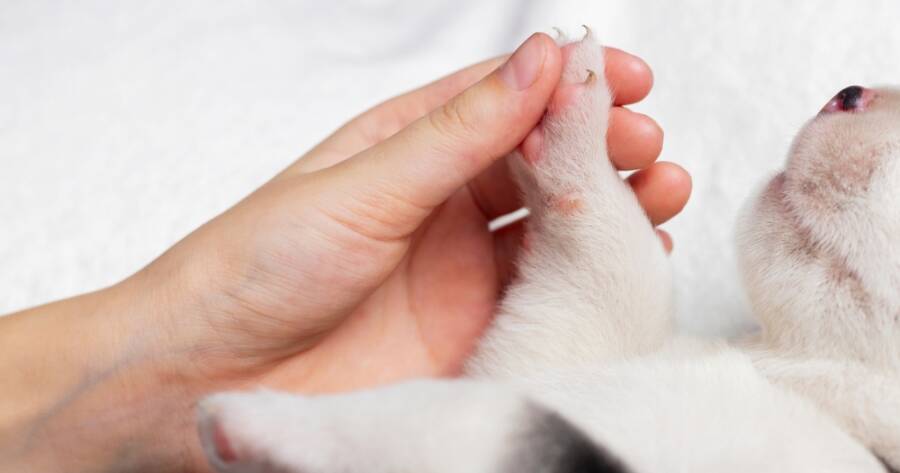
The Catalburun is a rare Turkish hunting dog known for its distinctive split nose and close ties to the Tarsus region of southern Turkey. During the first four weeks of life, puppies change rapidly from completely dependent newborns into alert, mobile youngsters beginning to play, walk, and transition toward solid food. Warmth, nutrition, careful monitoring, and gentle social development are especially important during that early stage.
What Makes a Catalburun Puppy Distinctive
The Tarsus Catalburun, sometimes called the Turkish Pointer, is a locally associated hunting dog from the Tarsus area of southern Turkey. Its most recognizable physical feature is a bifid nose, meaning the outer nose has a pronounced division down the center. The population has traditionally been associated with pointing and hunting work in the region (source).
Catalburuns remain uncommon outside Turkey, and information about the population is considerably more limited than it is for internationally standardized breeds. Their split nose is well documented, but claims that it automatically gives the dogs a superior sense of smell have not been established by controlled research (source). During the first weeks of life, their development largely follows the same basic biological stages as other domestic puppies.
Week One: Warmth, Nursing, and Close Monitoring
Newborn Catalburun puppies enter the world blind, deaf, and almost completely dependent on their mother. Their earliest days revolve around nursing and sleeping, while the mother provides warmth, nourishment, cleaning, and stimulation. Caregivers should monitor each puppy closely and track weight so that problems such as poor nursing or failure to gain weight can be identified early (source).
Temperature control is especially important because newborn puppies cannot regulate their body temperature effectively. Merck Veterinary Manual notes that puppies lack mature thermoregulation until around four weeks of age, making a properly warmed environment essential during the neonatal period (source). Puppies that become chilled may have difficulty nursing and digesting food, while excessive heat can also be dangerous. Any puppy that repeatedly cries, feels cold, stops nursing, or loses weight should receive prompt veterinary attention.
Week Two: Eyes Open and Awareness Begins
The second week brings some of the first obvious developmental changes. Catalburun puppies generally begin opening their eyes between roughly 10 and 14 days, although their vision is still limited at first. Their hearing also begins developing around this period as the ear canals open and the puppies become increasingly responsive to their surroundings (source).
Movement also starts to change. Puppies that previously crawled primarily toward their mother begin trying to push themselves upright and become more alert between nursing sessions. VCA notes that puppies should generally be becoming alert and attempting to stand by about two weeks of age (source). Development still varies from puppy to puppy, but a veterinarian should be contacted if a young puppy is failing to gain weight or appears significantly behind expected milestones.
Week Three: First Steps and Early Interaction
Around the third week, Catalburun puppies begin moving much more confidently. Their legs become stronger, and they start walking rather than simply crawling around the whelping area. VCA notes that by approximately three weeks, healthy puppies may already be trying to climb out of their nesting area as their strength and coordination improve (source).
The third week also marks the beginning of more obvious social behavior. Puppies start interacting more actively with littermates through gentle mouthing, pawing, movement, and early play. Furry Critter identifies roughly three weeks onward as the beginning of the important socialization period, when age-appropriate handling and exposure to mild environmental stimuli can begin (source). Experiences should remain calm and controlled because young puppies are still physically vulnerable and easily overwhelmed.
Week Four: Play, Teeth, and the Start of Weaning
By four weeks, a healthy Catalburun puppy is becoming noticeably more active. Puppies should generally be able to walk, run, and play, although their movements may still look clumsy compared with those of an older dog (source). Their growing mobility means the puppy area may need to be expanded and made safe for exploration, with secure footing and no small objects or gaps that could create hazards.
Baby teeth also begin emerging around three to four weeks, which coincides with the early stages of weaning. Softened puppy food or an appropriate gruel can gradually be introduced while the puppies continue nursing from their mother (source). The transition should be gradual rather than abrupt. Week four is also an important time for gentle handling, littermate play, and exposure to ordinary household sights and sounds at a level that does not frighten or overstimulate the puppies.
What Breeders and Caregivers Should Watch Closely
The first month is a vulnerable period for any puppy, including the Catalburun. Daily weight monitoring is one of the simplest ways to spot trouble early. VCA notes that most puppies should roughly double their birth weight within the first seven to eight days, and a puppy that stops gaining or begins losing weight requires attention (source).
Caregivers should also watch for persistent crying, difficulty breathing, poor nursing, diarrhea, unusual lethargy, or developmental delays. The Catalburun’s split nose should not automatically be assumed to indicate a medical problem, but the nose, mouth, and palate should still be examined as part of routine veterinary care because visible nasal anatomy alone does not confirm what is happening internally (source). Early veterinary evaluation is especially important when a puppy has trouble feeding or gaining weight.
From Newborn to Exploring Puppy
The first four weeks of a Catalburun puppy’s life are marked by rapid change. Newborns begin completely dependent on their mother, but within a month they are opening their eyes, responding to sounds, walking, playing, growing teeth, and beginning the transition toward solid food. The Catalburun may be an uncommon and visually distinctive dog, but its youngest puppies still depend on the same fundamentals that support healthy development in any breed.
Consistent warmth, adequate nursing, daily observation, gradual weaning, safe social exposure, and veterinary care give puppies the strongest possible start. For such a limited and little-studied population, careful breeding and responsible early care are especially important.