

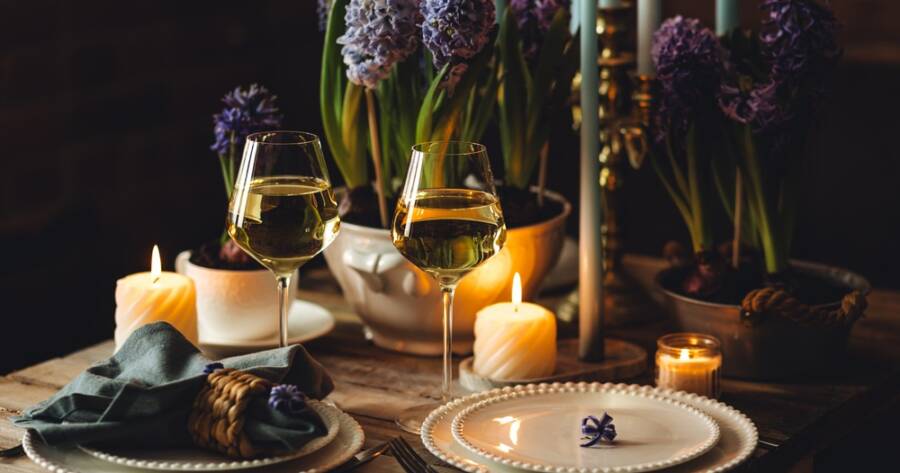
A dining table does not need a strip of fabric down the middle to look finished. Modern styling can be cleaner, more sculptural, and easier to change with the seasons. Instead of relying on a traditional runner, consider greenery, statement vessels, grouped objects, natural materials, or even an intentionally bare surface. Understand how to complement the table while preserving enough space for everyday use.
Let One Statement Piece Do the Work
One of the simplest ways to replace a runner is to choose a single object with enough scale to anchor the table. An oversized ceramic bowl, sculptural vase, or substantial planter creates a clear focal point without filling the entire surface. Maison de Cinq recommends using a generously sized centerpiece rather than something small that can look isolated on a large table (source).
Scale the object to both the tabletop and the room. A long rectangular table may handle a wide vessel, while a round table often looks balanced with one taller centerpiece. Keeping the arrangement concentrated in the middle also makes it easier to clear space when dinner is served.
Bring in Greenery Without Creating a Formal Arrangement
Branches, leaves, potted plants, and simple garden clippings can soften a dining table while avoiding the formality of an arranged runner. Homedit includes leafy arrangements, branches, succulents, and terrariums among its alternatives to conventional table linens (source).
For a more modern effect, keep the greenery restrained. A few asymmetrical branches in a strong vase can look more contemporary than a dense floral arrangement. Low plants or small vessels are useful when people regularly sit at the table because they preserve sightlines across the room. Seasonal changes can come from the plants themselves rather than an entirely new collection of decorations.
Build a Loose, Layered Vignette
A single centerpiece is not the only option. Grouping a few objects can create a table that feels styled without looking rigid. A bowl, candlestick, vase, and small decorative object can work together if their heights, shapes, and materials differ.
Maison de Cinq suggests limiting this kind of vignette to roughly three to five pieces and mixing taller elements with lower objects such as bowls or trays (source). That principle keeps the arrangement from turning into clutter. Try connecting otherwise different pieces through one shared detail—a similar finish, repeating color, or natural material—rather than buying a perfectly matched set.
Use Wood, Stone, and Other Natural Materials
Replacing fabric with a harder material can give the table more structure. A long wooden board, stone tray, or shallow ceramic platter creates a base for candles, serving pieces, fruit, or small plants while still showing plenty of the tabletop.
Wooden boards are one alternative suggested by Homedit, which also notes that they can double as serving surfaces for appetizers or family-style food (source). For a modern room, choose a board with a simple silhouette rather than adding many rustic accessories around it. Walnut, oak, stone, and other natural finishes also fit comfortably with the current preference for warm, tactile materials in dining spaces (source).
Make Candles More Architectural
Candles do not have to be reserved for formal dinners. A row of low candleholders, two substantial pillars, or a small grouping of tapers can create rhythm along the table without reproducing the flat, linear look of a runner.
Varying the height is usually more interesting than arranging identical holders at perfectly even intervals. Materials matter as well: brushed metal can sharpen a wood table, while ceramic or stone holders create a softer effect. For everyday styling, leave enough open space around the candles so the composition feels deliberate rather than crowded.
Consider Leaving the Table Mostly Bare
Sometimes the best alternative to a runner is nothing at all. If the table has an interesting grain, stone surface, sculptural base, or distinctive shape, covering it can hide one of the room’s strongest design features.
Minimal dining rooms can successfully make the table and chairs themselves the visual focus, rather than relying on layers of tabletop decoration (source). One small bowl or vase may be enough. This approach is especially practical in households where the dining table also serves as a workspace, homework station, or multipurpose surface.
Create a Table That Can Change With You
Modern dining-table styling is less about following a fixed decorating formula and more about choosing a few elements with purpose. A sculptural vessel can provide drama, greenery can introduce movement, grouped objects can add personality, and natural materials can contribute warmth without overwhelming the surface.
Ditching the traditional runner also makes the table easier to adapt. Decorations can shrink for everyday meals, expand for entertaining, or disappear completely when the table itself deserves attention. By focusing on scale, texture, spacing, and function, the dining table can feel polished without looking overly arranged—and modern without becoming cold or impractical.