

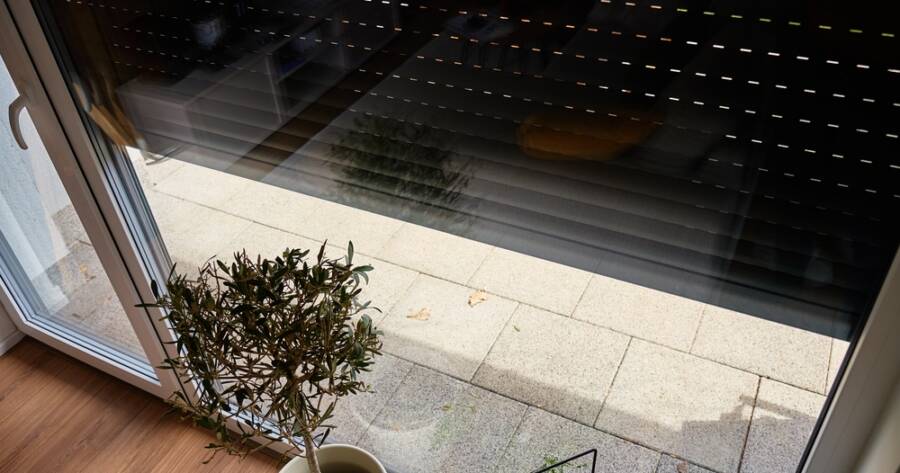
Vertical blinds on patio and sliding glass doors have quietly fallen out of favor, and homeowners across the country are replacing them with sleeker, more functional alternatives that better suit modern interiors. Understand which alternatives are making vertical blinds on patio doors a trend of the past!
Why Vertical Blinds Are Being Left Behind
For many years, vertical blinds were the default choice for covering wide windows and sliding glass doors. Their widespread use was largely a matter of availability and convention rather than genuine preference. Today, however, a growing number of homeowners are recognizing that vertical blinds carry real drawbacks — from their dated visual appearance to the noise they make when air catches the dangling slats, to the damage that curious pets can cause by pushing through them to peer outside.
Horizontal blinds face similar problems at wide widths. When stretched across the span of a sliding door, horizontal blinds can become extremely heavy and are especially vulnerable to being bent or broken by pets trying to slip behind them (source). The result is that both traditional vertical and horizontal blinds are increasingly considered poor fits for patio doors — and the market has responded with a new generation of stylish, practical replacements.
Panel Track Blinds: The Modern Frontrunner
Among the most popular replacements for vertical blinds on wide doors are panel track blinds. These window treatments consist of flat fabric panels that travel smoothly along a ceiling-mounted track system, creating a clean, architectural look that suits contemporary and transitional interiors alike. Because the panels move as a cohesive unit rather than as individual dangling slats, they avoid the rattling and tangling that often plague traditional vertical blinds.
Panel track blinds are “the top pick for sliding glass doors and wide windows,” according to one major retailer, because they “offer sleek style, are easy to operate”, and come in “hundreds of fabric options” (source). The breadth of available fabrics means homeowners can fine-tune how much light enters the room while still achieving a polished, intentional aesthetic. Whether the priority is blackout coverage for a bedroom slider or a light-filtering effect for a sunlit living room, panel track systems accommodate a wide range of needs.
Vertical Cellular Shades for Energy Efficiency
Another rising alternative is the vertical cellular shade, which brings a meaningful functional advantage beyond aesthetics. These shades are constructed with a honeycomb-shaped fabric that forms small air pockets within the material itself. That cellular structure acts as an additional layer of insulation directly at the window surface, helping keep rooms cooler during summer months and warmer during winter (source).
For homeowners focused on energy costs or interior comfort, this makes vertical cellular shades a particularly compelling choice. Hunter Douglas, a well-known name in window treatments, notes that this honeycomb construction “captures air in separate compartments, providing an additional layer of insulation at the window” that helps conserve energy throughout the year (source). On top of their thermal performance, cellular shades offer a softer, more refined visual profile than their predecessor.
Sheer Vertical Shades: The Best of Both Worlds
Sheer vertical shades occupy a unique middle ground between the structure of a traditional blind and the softness of curtain panels. Their construction links vinyl vanes to a large piece of sheer fabric, creating a hybrid treatment that can be tilted open to allow natural light to filter through or closed to provide privacy without fully blocking views (source).
This makes sheer vertical shades a strong fit for living spaces where the goal is to maintain a connection to the outdoors — perhaps a patio door opening to a garden or a scenic backyard — while still having control over glare and sightlines. The layered sheer fabric gives these treatments an elegantly airy quality that vertical blinds simply cannot replicate.
Shutters as a Premium Patio Door Option
For those looking to make a more permanent and upscale investment, interior shutters represent another compelling option for patio doors. Unlike fabric-based alternatives, shutters are constructed from rigid materials that deliver a warm, substantial feel inside any room. They’re especially well-suited to high-traffic areas of the home because their durability matches their visual appeal (source).
Shutters are also easier to clean than fabric window treatments, which can be a significant consideration near a door that sees regular outdoor foot traffic. Their louvers can be adjusted to control both light and airflow without requiring the entire panel to be moved, offering a level of precision that fabric-based solutions cannot always match.
Choosing the Right Treatment for Any Patio Door
No single replacement suits every home or every door configuration. Panel track blinds excel where a streamlined modern look is the priority. Vertical cellular shades make the most sense in climates with extreme temperature swings where energy savings matter. Sheer vertical shades work best for homeowners who want softened light and a view-preserving option. Shutters fit spaces where durability and long-term investment are the deciding factors.
What all of these alternatives share is a significant improvement over the dated, clattering aesthetic of traditional vertical blinds. As window treatment technology has advanced, the range of materials, operating systems, and design options has expanded considerably — making it easier than ever to find a patio door covering that genuinely suits a home’s style and functional needs.
Why You Should Learn More About Door Blinds Today
The shift away from traditional vertical blinds reflects a broader evolution in how homeowners think about window treatments — not just as functional necessities, but as design elements that shape how a room looks and feels. Modern alternatives like panel track blinds, vertical cellular shades, sheer vertical shades, and shutters each bring distinct advantages in style, light control, insulation, and durability.
Understanding the differences between these options empowers homeowners to make choices that serve both their aesthetic preferences and their practical requirements. Anyone upgrading a patio door or large window would benefit from exploring the full range of available treatments before settling on a solution.