

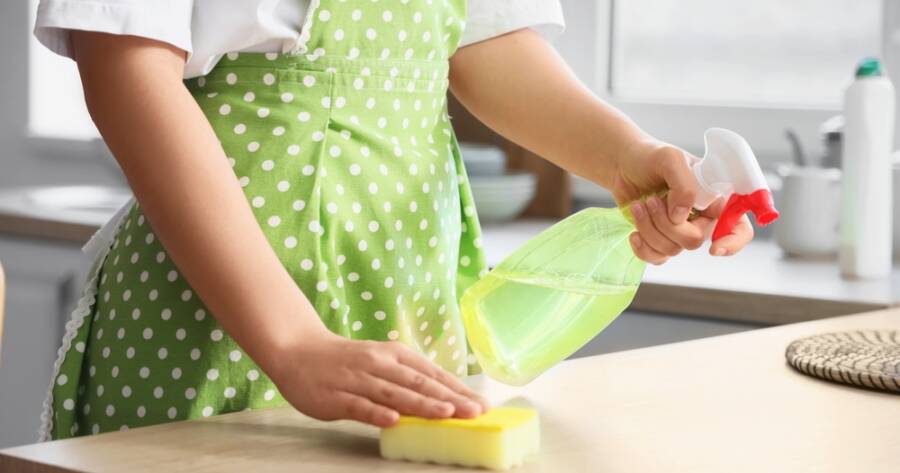
Years-old kitchen stains can be stubborn, but the safest removal method depends on both the countertop material and what caused the mark. Coffee, grease, rust, hard water, and chemical discoloration don’t respond to the same treatment. Identifying the surface first, then choosing a targeted cleaning method, can improve results while reducing the risk of permanent countertop damage.
Identify the Countertop Material First
Before treating an old stain, determine whether the countertop is quartz, granite, marble, laminate, solid surface, butcher block, or another material. A cleaner that’s suitable for one surface can dull, discolor, scratch, or otherwise damage another.
Natural stone requires particular care. The Natural Stone Institute recommends neutral cleaners or mild dish detergent for routine cleaning and warns that acidic products can damage certain stones. Vinegar, for example, shouldn’t be used on marble, limestone, or travertine (source).
Manufacturer instructions matter for engineered surfaces too. Caesarstone recommends testing cleaning products in an inconspicuous area and cautions that prolonged chemical exposure can damage quartz and mineral surfaces (source).
Match the Treatment to the Type of Stain
Figuring out what caused the mark can narrow down the safest treatment (source). Coffee, tea, wine, and food stains are different from grease, rust, hard-water deposits, or discoloration caused by a chemical reaction.
Color and location can provide clues. Dark marks near cooking areas may involve oil, while orange or brown discoloration around metal objects can indicate rust. A cloudy or dull patch on marble may actually be etching rather than a removable stain. Knowing the difference can prevent repeated scrubbing with a product that won’t solve the underlying problem.
Start With Gentle Cleaning for Food and Dried Spills
For many old food, coffee, or beverage marks, start with the least aggressive method recommended for the countertop. Quartz manufacturers generally suggest warm water, mild detergent, and a soft cloth before moving to a stronger approved cleaner. Dried residue can sometimes be softened with water for several minutes before cleaning (source).
Laminate also benefits from a gentle first approach. Formica recommends a damp, nonabrasive cloth with mild detergent or household cleaner, followed by rinsing and drying. Avoid soaking laminate around seams because excess water can reach the material underneath and cause swelling (source). If the stain remains, check the manufacturer’s approved-cleaner list before increasing the strength of the treatment.
Use Targeted Products for Grease, Rust, and Mineral Marks
Some old stains require a cleaner designed for the specific problem. Greasy residue may respond to a manufacturer-approved degreasing cleaner, while rust or metal marks may require a product like Bar Keepers Friend (source).
Don’t assume common household remedies are safe everywhere. Vinegar may be suitable for certain cleaning tasks but can damage acid-sensitive natural stone. Abrasive powders and scrubbers can also alter some finishes. Never mix cleaning chemicals, and always follow both the countertop manufacturer’s instructions and the cleaner’s label.
Consider a Poultice for Deep Natural Stone Stains
Older stains that have penetrated granite, marble, or another natural stone may need more than ordinary surface cleaning. The Natural Stone Institute notes that stubborn or deeper stains can sometimes be treated with a poultice, which holds an appropriate stain-removing agent against the affected area so the discoloration can be drawn from the stone (source).
The correct poultice depends on whether the stain comes from oil, organic material, rust, or another source (source). Because some treatments can damage stone when they’re mismatched with the material, a commercial stone-specific product or professional stone specialist may be the safer choice for valuable countertops, extensive staining, or marks that haven’t responded to basic cleaning.
Try a Baking Soda Paste for Some Stubborn Stains
Baking soda can be useful for certain set-in countertop stains because it provides gentle abrasive action without requiring a stronger commercial cleaner. One simple method is to mix baking soda with enough water to create a paste, apply it to the stained area, let it sit for several minutes, and then wipe or rub very gently with a soft cloth (source).
Baking soda still isn’t safe for every surface or finish. Because it’s mildly abrasive, aggressive scrubbing can leave marks or dull some countertops. Test the paste in a hidden area and use light pressure rather than vigorous scrubbing.
Know When a Stain May Actually Be Surface Damage
Not every old mark can be cleaned away. Acids can etch natural stone, while prolonged exposure to certain chemicals can leave quartz with haze, blotches, or permanent discoloration. Caesarstone advises seeking professional guidance when ordinary cleaning can’t remove a mark or when the surface develops persistent haziness or discolored patches (source).
Some solid-surface materials can also be professionally restored rather than simply cleaned. Corian notes that more severe damage or refinishing needs may require professional repair (source). Continuing to scrub a damaged finish with increasingly aggressive cleaners can make the problem worse.
A Safer Path to Cleaner Countertops
Removing a years-old kitchen stain safely starts with two questions: What is the countertop made from, and what probably caused the mark? From there, begin with gentle cleaning and move to a targeted treatment only when the surface manufacturer says it’s appropriate.
Food residue may need little more than careful cleaning, while grease, rust, or deep natural stone stains can require specialized products or professional treatment. When a mark is actually etching, chemical discoloration, or surface damage, further cleaning may not help. Taking a material-specific approach gives old stains the best chance of removal without sacrificing the countertop in the process.