

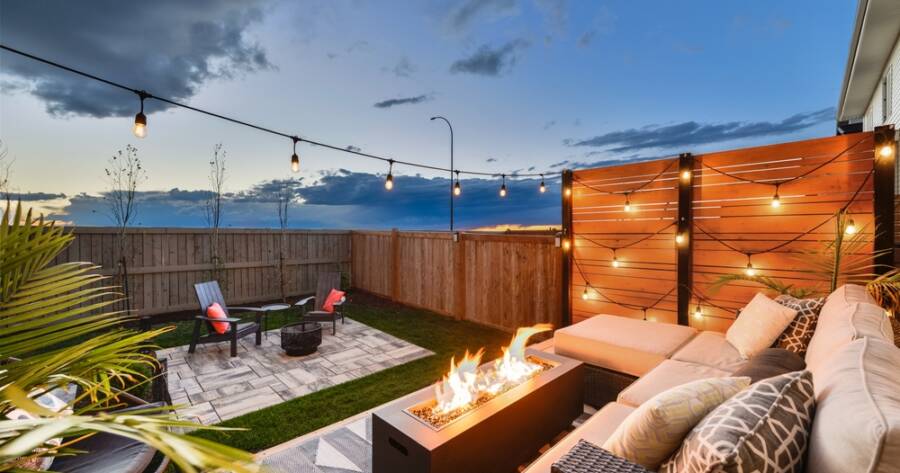
Tall backyard fences have long been the default solution for outdoor privacy, but modern privacy screens are changing the way homeowners think about their outdoor spaces. Top choices combine function, flexibility, and style in ways a standard fence simply cannot match.
The Problem With Tall Fences
For decades, the six-foot wooden fence has been the go-to answer for homeowners who want to keep their backyard away from prying eyes. But this approach comes with real trade-offs. Tall, solid fencing can make a yard feel enclosed and smaller than it actually is, particularly in compact outdoor spaces. As design experts have noted, “barriers tend to shrink spaces — a small space enclosed by tall hedges feels even smaller and more isolated,” making lower-profile privacy screens a smarter design choice for smaller yards (source). Beyond aesthetics, traditional fencing requires ongoing maintenance, significant upfront investment, and once installed, offers very little flexibility.
Privacy fences also carry a notable price tag. Homeowners can expect to spend anywhere between $40 and $150 per linear foot, with final costs shifting based on height, materials, labor, and geographic location (source). For a large yard, those numbers add up quickly — and the result is still a fixed structure that offers no ability to adapt to changing needs throughout the day or across the seasons.
What Makes Privacy Screens Different
Modern privacy screens approach the challenge of outdoor seclusion from a completely different angle. Rather than walling off a space entirely, they introduce targeted visual barriers that block specific sightlines without cutting off airflow, light, or a sense of openness. Prefab privacy screens, for example, are “a great way to DIY structural privacy elements in your yard,” functioning as “great accent pieces in a design” that require minimal space (source).
One of the strongest advantages privacy screens hold over traditional fences is flexibility. Retractable and motorized systems allow homeowners to deploy coverage when needed and pull it back when they prefer an open feel — something a permanent tall fence is simply incapable of providing (source). This adaptability makes screens particularly valuable for spaces that serve multiple purposes throughout the week, from casual family use to outdoor entertaining.
Privacy screens also extend their usefulness well beyond blocking views. Depending on the materials chosen, many systems simultaneously address glare, direct sun exposure, and even insects — transforming a patio or lanai into a space suitable for year-round outdoor living (source). A standard wooden fence offers none of these added benefits.
Design Versatility That Fences Struggle to Match
Privacy screens open up a wide range of aesthetic possibilities that rigid fence panels rarely allow. Screens can be incorporated into a pergola structure to manage views from the side, and when paired with thoughtful base planting, they blend naturally into the surrounding landscape rather than appearing as an afterthought (source). This kind of intentional design integration is difficult to achieve with a conventional tall fence.
Material choices also give privacy screens a distinct visual edge. A slatted screen built from Ipe wood mounted to steel posts “will need almost no maintenance for many years and will have a very long lifespan,” and can even serve as a trellis for climbing vines — adding a living element to the structure over time (source). For those who prefer a more traditional aesthetic, horizontal cedar board designs with spacing between slats deliver a contemporary look while still filtering sightlines without fully closing off the yard (source).
Even homeowners who prefer to keep some fencing in place can supplement with screens rather than replacing everything outright. Adding a privacy screen element to an existing shorter fence — rather than building a towering structure from scratch — preserves both the feel of the space and the budget.
How Privacy Screens Transform Outdoor Living
There is a meaningful connection between how private a space feels and how often people actually use it. Research supports the idea that a patio or lanai “often becomes more usable once it feels less exposed — people are more likely to sit outside, eat outside, work outside, or entertain guests when the space feels comfortable and less visible” (source). Privacy screens help achieve that feeling without turning an outdoor area into a closed-off enclosure.
This shift in how outdoor space functions is significant. Rather than having a yard that gets occasional use, homeowners who invest in thoughtful screening solutions often find that their outdoor areas become a genuine extension of the home’s living space — comfortable, functional, and used far more consistently throughout the year (source).
Why You Should Learn More About Privacy Screens
Privacy screens represent a meaningful evolution in outdoor design — one that delivers seclusion, comfort, and style without the visual heaviness or cost of a towering fence. They work with a space rather than against it, preserving light and openness while managing sightlines where it matters most.
From motorized retractable systems to handcrafted wood-and-steel panels, the range of available options means nearly any outdoor space can benefit from a well-chosen screen. For homeowners looking to get more out of their backyards, patios, or poolside areas, exploring modern privacy screen solutions offers a smarter, more adaptable path forward than the traditional fence ever could.