

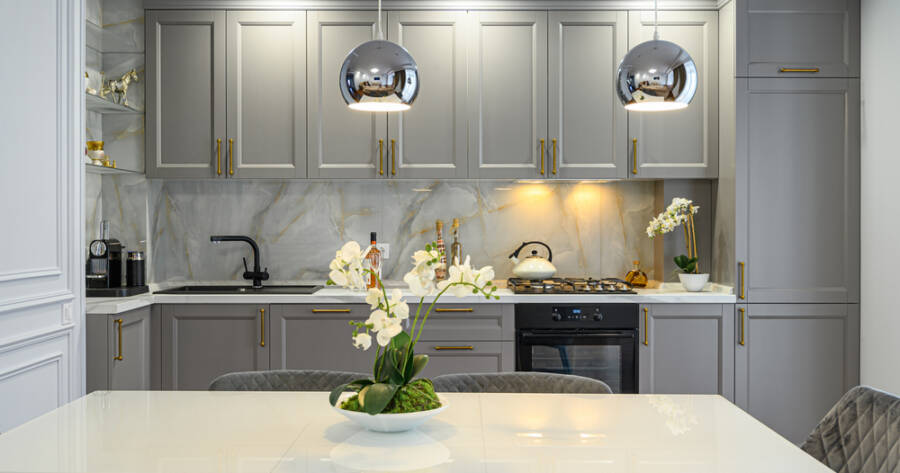
Grey brings a calm, polished quality to kitchens while giving other materials and finishes room to stand out. It can soften bold surfaces, connect wood and metal accents, and create a clean backdrop that works across many design styles. For homeowners planning a refresh, grey remains a versatile option worth considering for a balanced, modern-looking space.
The Rise of Grey in Contemporary Kitchen Design
Few colors have made as lasting an impression on kitchen interiors as grey. What began as a subtle shift in consumer preference has evolved into a defining characteristic of modern kitchens across the United States. Industry professionals consistently point to grey as a cornerstone of contemporary design, and its presence continues to grow with each passing year.
The National Kitchen and Bath Association’s research draws on input from hundreds of design professionals to identify the forces shaping kitchen spaces in the years ahead. Among the themes driving these changes are organic and earthy aesthetics, material sophistication, and a push toward seamless, cohesive interiors (source). Grey sits at the intersection of all three, offering a tone that feels grounded, refined, and unified without demanding attention.
What sets grey apart from other neutral choices is its ability to anchor a kitchen without imposing a fixed mood. It can feel warm or cool, understated or dramatic, depending entirely on how it is used. This adaptability has made it a go-to selection for designers working across a wide spectrum of styles, from minimalist to transitional to rustic-modern.
Grey as a Versatile Design Foundation
One of the strongest arguments for grey in the kitchen is its compatibility with nearly every other material a homeowner might choose. Natural stone countertops, warm wood accents, brushed metal hardware, and even bold pops of color all find a complementary partner in grey (source). Rather than competing with surrounding elements, grey creates a visual foundation that lets other materials breathe and shine.
This is particularly valuable in kitchen design, where multiple surfaces, finishes, and textures converge in a single space. A grey cabinet palette, for instance, can tie together a marble countertop, a warm oak island, and stainless steel appliances without any single element feeling out of place. The result is a cohesive space that communicates intentional design rather than a collection of mismatched choices.
Designers frequently recommend pairing grey cabinetry or walls with warmer tones in flooring or countertops to prevent the kitchen from reading as cold or clinical (source). This balancing act is one of the key skills that separates a grey kitchen that feels inviting from one that feels stark, and it speaks to grey’s potential as a sophisticated but demanding color choice.
How Grey Reflects Broader Kitchen Trends
The popularity of grey aligns directly with some of the most significant shifts in how people think about kitchen spaces today. The NKBA’s 2026 Kitchen Trends Report notes that “design decisions made in the kitchen now ripple through the rest of the home, shaping a unified aesthetic and lifestyle” (source). This perspective reflects how the kitchen has moved beyond pure function to become a central hub of the home’s overall design identity.
Grey supports this shift beautifully. Because it occupies a neutral but elevated position in any color palette, it acts as a thread connecting the kitchen to adjacent living areas. A grey kitchen can transition effortlessly into a grey-toned dining room or open-concept living space, reinforcing the kind of seamless design that professionals increasingly consider essential to modern home interiors.
Beyond its visual qualities, grey also resonates with the trend toward organic and earthy materials. When grey surfaces are paired with natural stone, matte finishes, or textured wood, the overall effect feels deeply connected to the natural world rather than cold or industrial. This is a distinction that matters greatly to today’s homeowners, who seek spaces that feel both curated and livable.
Grey Across Kitchen Sizes and Styles
Another reason for grey’s widespread adoption is that it performs well regardless of kitchen size or layout. In smaller kitchens, lighter grey tones open up the space visually, lending an airy quality that darker colors cannot achieve. In larger, more expansive kitchens, deeper charcoal or slate tones can establish a commanding atmosphere without overwhelming the room (source).
This range within the grey spectrum is one of the color’s most underappreciated strengths. Homeowners are not choosing between a single shade but rather a full family of tones, each carrying its own character and best-use scenarios. From barely-there silver-grey to bold graphite, the options within this color family are broad enough to satisfy nearly any aesthetic preference.
Style-wise, grey integrates naturally into farmhouse kitchens, Scandinavian-inspired spaces, industrial lofts, and transitional homes alike. It carries no single stylistic identity, which paradoxically makes it one of the most stylistically flexible choices available. This cross-compatibility has helped grey transcend trend cycles and establish itself as a lasting element of thoughtful kitchen design.
Why Grey Feels Timeless Rather Than Trendy
One of the consistent observations made by kitchen design professionals is that grey does not carry the expiration date that bolder color trends often do. While bright yellows, deep navies, or terracotta tones can feel unmistakably tied to a particular era, grey maintains a quality of restraint that keeps it relevant across decades (source).
This is important to homeowners who view kitchen renovations as long-term investments rather than short-term refreshes. Choosing a palette centered on grey reduces the risk of the kitchen feeling dated within a few years, an especially significant consideration given the cost and disruption that kitchen remodels typically involve. Grey offers the rare assurance that a design choice made today is unlikely to feel wrong a decade from now.
The connection between grey and material sophistication also plays into this durability. When grey surfaces are paired with high-quality materials, the combination communicates craftsmanship rather than trend-chasing, lending the entire space a sense of permanence and care that homeowners and potential buyers alike find compelling.
Why You Should Learn More About Grey Kitchens Today
Grey kitchens represent far more than a passing design moment. They reflect a broader movement toward intentional, materials-driven spaces where every decision contributes to a cohesive whole. Industry research consistently identifies grey as central to the organic, sophisticated, and seamless kitchen environments that define modern home design in North America (source).
Whether the goal is a complete renovation or a targeted refresh, understanding how grey interacts with light, materials, and space can help homeowners make confident, lasting design choices. For anyone planning a kitchen project or simply reconsidering their current space, exploring the full potential of grey is a worthwhile endeavor that professional designers widely endorse.