

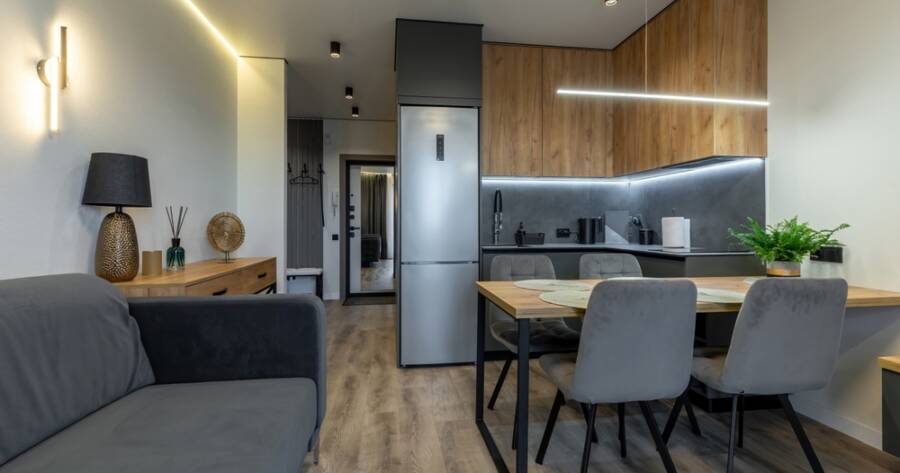
Grey continues to earn a place in modern kitchens because it can shift easily between soft, warm, dramatic, and understated. The right shade can highlight natural wood, stone, metal finishes, and statement lighting without overwhelming the room. As kitchen palettes become warmer and more layered in 2026, grey works best as a flexible foundation rather than a one-note trend.
The Neutral Palette Revolution
Modern kitchen design in the United States has undergone a significant color shift over the past several years. Homeowners and designers alike are gravitating toward palettes that feel calm, considered, and built to last. Neutral tones have emerged as the clear frontrunner in this movement, with survey data from the National Kitchen and Bath Association confirming that neutrals are overwhelmingly the most popular color direction in kitchen design today (source).
Grey sits at the heart of this neutral revolution. Unlike stark white, which can feel clinical, or beige, which risks reading as dated, grey occupies a uniquely sophisticated middle ground. It reads as modern without being cold, and timeless without being boring. That balance has made it the go-to choice for homeowners who want a kitchen that feels fresh today but will not look out of place a decade from now.
Why Grey Works So Well in Kitchen Spaces
Part of grey’s appeal in kitchen design comes down to its extraordinary versatility. The color family spans a wide spectrum, from barely-there silver-toned hues to deep charcoal shades that anchor a space with drama and depth. This range means grey can be adapted to suit virtually any kitchen size, layout, or architectural style. A pale grey works beautifully in smaller kitchens where light needs to bounce around the room, while a darker grey on lower cabinets can add grounding visual weight to an open-plan space.
Grey also functions exceptionally well as a backdrop for layering materials. Designers consistently point to the combination of stone countertops, warm wood shelving, and metal accents as a formula for kitchens that feel both expressive and enduring (source). Grey cabinetry sets the stage for all of these elements, acting as a neutral canvas that lets textures and finishes take center stage without competing with the wall color or cabinet doors.
The Minimalist Connection
Grey’s dominance is also closely tied to the broader rise of minimalism in American kitchen design. Clean lines, uncluttered surfaces, and intentional material choices are priorities for a growing share of homeowners. According to NKBA survey data, minimalism ranks as a defining style direction for kitchens over the next several years, with flat slab cabinet door styles gaining significant traction (source). Grey pairs naturally with this aesthetic, reinforcing the sense of visual calm that minimalist kitchens are designed to achieve.
Panel-ready appliances that integrate seamlessly into surrounding cabinetry have also become increasingly popular, and grey cabinetry makes this integration look effortless (source). When appliances disappear into the design, the overall space feels more cohesive and deliberate, which is a priority for homeowners drawn to contemporary aesthetics.
Mixing and Matching: The Two-Tone Grey Trend
One of the most exciting developments in grey kitchen design is the growing preference for using multiple shades within a single space. Rather than committing to one uniform grey throughout, many homeowners are choosing a lighter tone for upper cabinets and a deeper shade for the island or lower cabinetry. Design professionals note that homeowners are increasingly mixing shades, selecting a different tone for the kitchen island than for the surrounding cabinets to create a focal point and visual interest (source).
This two-tone approach adds dimension to a kitchen without introducing jarring color contrasts. It also allows homeowners to personalize the space while staying within a cohesive palette, a strategy that aligns well with the transitional and timeless design style that tops popularity rankings in professional surveys (source).
Natural Materials Elevate the Grey Kitchen
Another reason grey has cemented its place in modern kitchen design is how beautifully it interacts with natural materials. Wood grain finishes, for example, have surpassed painted cabinet finishes in terms of growing popularity among design professionals, reflecting a broader industry appetite for muted, organic palettes (source). When warm wood tones are placed alongside cool or mid-toned grey, the contrast creates a sense of lived-in warmth that feels both current and welcoming.
Stone countertops and backsplashes further reinforce the grey kitchen’s appeal. The natural veining found in marble, quartzite, and engineered stone often incorporates grey undertones, making these surfaces a natural partner for grey cabinetry. The result is a kitchen that feels layered and considered, rather than assembled from a single catalog page. Homeowners who invest in this combination consistently achieve spaces that photograph beautifully and function equally well in everyday life.
Longevity and Resale Value
Beyond aesthetics, there is a practical dimension to grey’s popularity that resonates strongly with American homeowners. Kitchens represent one of the most significant investments in any home renovation, and choosing a color with proven staying power is a financially sound decision. The consistent emphasis on transitional and timeless design in professional surveys signals that designers and their clients are thinking long-term (source). Grey sits comfortably within that framework, appealing to a broad range of buyers and adapting easily to evolving accessory trends without requiring a full redesign.
Warm neutrals, including warm greys, continue to perform strongly when homeowners consider resale appeal. A kitchen finished in a well-chosen grey reads as move-in ready to prospective buyers, reducing the mental friction that comes with imagining a renovation. That perception of readiness and sophistication translates directly into buyer confidence.
Why You Should Learn More About Grey Kitchen Design Today
Grey’s takeover of the modern American kitchen is not a fleeting trend but a reflection of deeper shifts in how people want to live in their homes. The color’s flexibility, its compatibility with natural materials, and its alignment with minimalist and timeless design values make it a durable choice for any renovation project.
As neutral palettes continue to dominate professional design surveys and homeowner preferences alike, grey remains the smart, stylish foundation for kitchens built to impress today and stand the test of time. For anyone considering a kitchen update, exploring the full range of grey options available represents a meaningful first step toward a space that truly works.